


BREAKTHROUGH FOR CASSAVA PRODUCTIVITY AND DROUGHT RESILIENCE
2025-12-19
興新聞張貼者
Unit秘書室
1,726
New study shows how targeted potassium transport improves yield and drought tolerance in cassava
As published in Nature Plants on 17 December 2025
DOI: https://www.nature.com/articles/s41477-025-02159-7
An international research team from the Cassava Source-Sink (CASS) consortium has achieved an important breakthrough in cassava improvement. In their newly published paper, the scientists report that introducing a modified potassium channel gene from Arabidopsis thaliana into cassava (Manihot esculenta) significantly increased photosynthetic efficiency, assimilate transport, and storage root yield — even under drought stress conditions.
The study, led by researchers from Friedrich-Alexander-University Erlangen-Nürnberg (FAU), RPTU Kaiserslautern, Forschungszentrum Jülich, and National Chung Hsing University (NCHU, Taiwan), demonstrates that targeted modification of potassium (K⁺) transport can enhance cassava productivity without additional fertilizer input.
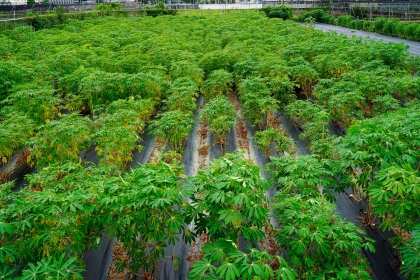
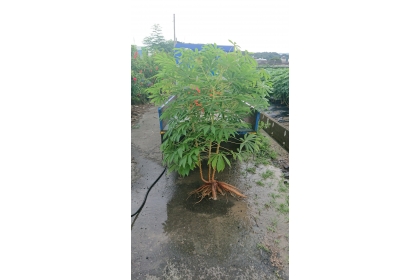
In both greenhouse and multi-year field trials, the transgenic cassava plants
expressing the non-rectifying Arabidopsis potassium channel gene variant (AKT2var) showed higher electron transport and CO₂ assimilation rates, increased phloem flow velocity, and improved source-sink carbohydrate transport.
“This work represents an important step toward unlocking cassava’s full potential,” said Prof. Uwe Sonnewald (FAU Erlangen-Nürnberg). “By enhancing nutrient transport and drought tolerance, we can help make cassava cultivation more productive and climateresilient — a crucial contribution to global food security.
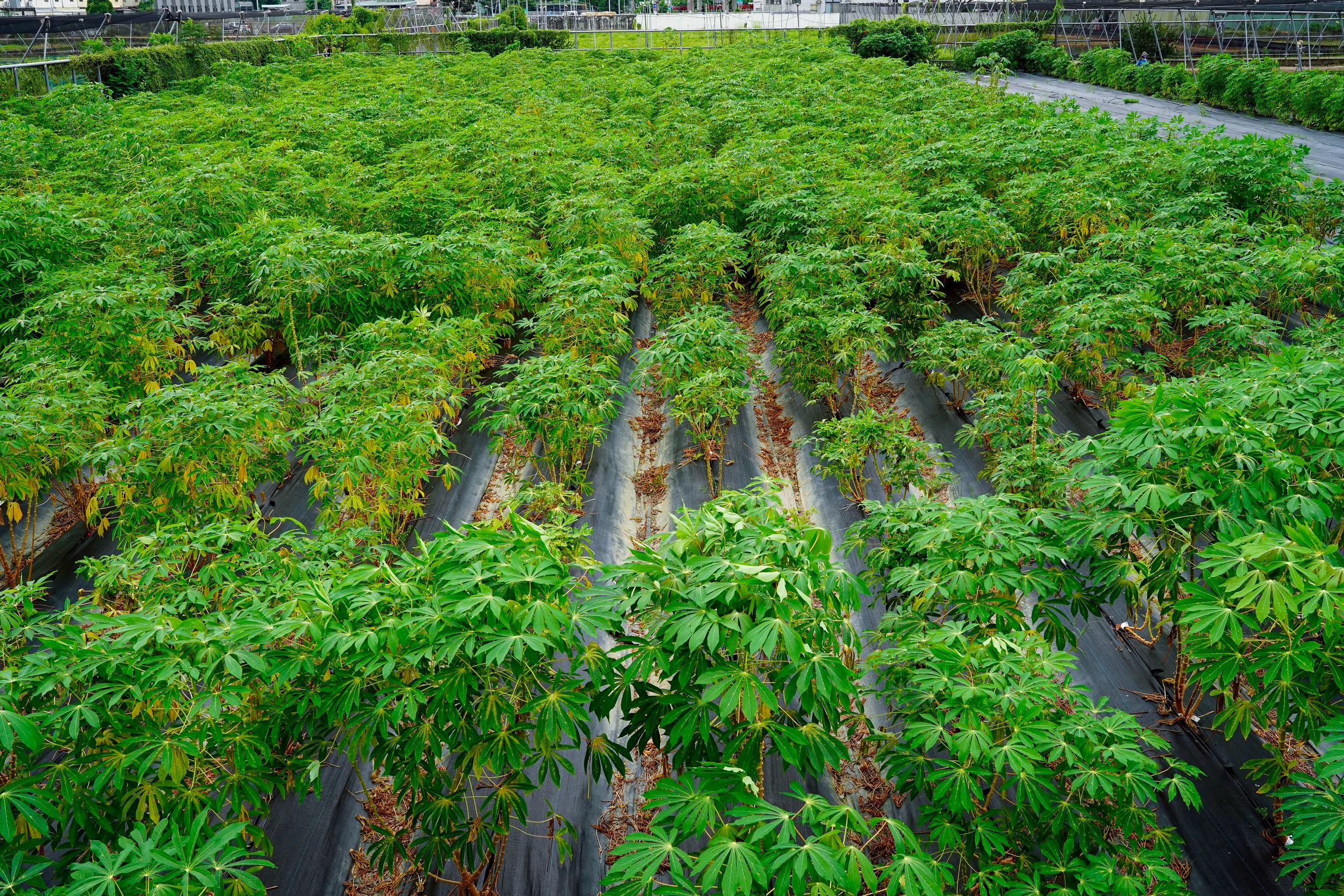
”Field experiments played a key role in validating the findings.
“Field experiments were a central part of the work to demonstrate that the new cassava traits were stable over several years,” explained Prof. Wilhelm Gruissem (National Chung Hsing University).
Additional partners highlighted the scientific and translational importance oft he work. “Our work illustrates the importance of translational research from a model plant to a global crop,” emphasized Prof. Ekkehard Neuhaus (University of Kaiserslautern).
Experts involved in the physiological and field-based analyses highlighted the broader significance of the results:
“Our work underlines the critical importance of field monitoring and a comprehensive understanding of the complex interactions between carbon uptake, transport, and storage in cassava as we work toward optimizing yields while maintaining the natural resistance of cassava,” said Prof. Uwe Rascher (Forschungszentrum Jülich).
He added: “It is great to be part of an interdisciplinary collaboration in plant research, which brings us one step closer to securing sustainable yields.”
Cassava is a staple food for nearly one billion people in the tropics, particularly for smallholder farmers in sub-Saharan Africa. The findings of this study provide a promising path toward improving yield and resilience in this vital crop.
The Cassava Source–Sink (CASS) Project is a global research collaboration dedicated to improving cassava productivity, climate resilience, and food and nutrition security. Coordinated at the Friedrich-Alexander-Universität Erlangen–Nürnberg (FAU) and funded by Gates Agricultural Innovations, CASS brings together leading partners including the Boyce Thompson Institute (USA), University of Oxford (UK), FAU and Forschungszentrum Jülich (Germany), the Max Planck Institute of Molecular Plant Physiology (Germany), RPTU (Germany), University of Helsinki (Finland), ETH Zürich (Switzerland), IITA (Nigeria), NRCRI (Nigeria), and National Chung Hsing University (Taiwan). Learn more at www.cass-research.org.
As published in Nature Plants on 17 December 2025
DOI: https://www.nature.com/articles/s41477-025-02159-7
An international research team from the Cassava Source-Sink (CASS) consortium has achieved an important breakthrough in cassava improvement. In their newly published paper, the scientists report that introducing a modified potassium channel gene from Arabidopsis thaliana into cassava (Manihot esculenta) significantly increased photosynthetic efficiency, assimilate transport, and storage root yield — even under drought stress conditions.
The study, led by researchers from Friedrich-Alexander-University Erlangen-Nürnberg (FAU), RPTU Kaiserslautern, Forschungszentrum Jülich, and National Chung Hsing University (NCHU, Taiwan), demonstrates that targeted modification of potassium (K⁺) transport can enhance cassava productivity without additional fertilizer input.
In both greenhouse and multi-year field trials, the transgenic cassava plants
expressing the non-rectifying Arabidopsis potassium channel gene variant (AKT2var) showed higher electron transport and CO₂ assimilation rates, increased phloem flow velocity, and improved source-sink carbohydrate transport.
“This work represents an important step toward unlocking cassava’s full potential,” said Prof. Uwe Sonnewald (FAU Erlangen-Nürnberg). “By enhancing nutrient transport and drought tolerance, we can help make cassava cultivation more productive and climateresilient — a crucial contribution to global food security.
”Field experiments played a key role in validating the findings.
“Field experiments were a central part of the work to demonstrate that the new cassava traits were stable over several years,” explained Prof. Wilhelm Gruissem (National Chung Hsing University).
Additional partners highlighted the scientific and translational importance oft he work. “Our work illustrates the importance of translational research from a model plant to a global crop,” emphasized Prof. Ekkehard Neuhaus (University of Kaiserslautern).
Experts involved in the physiological and field-based analyses highlighted the broader significance of the results:
“Our work underlines the critical importance of field monitoring and a comprehensive understanding of the complex interactions between carbon uptake, transport, and storage in cassava as we work toward optimizing yields while maintaining the natural resistance of cassava,” said Prof. Uwe Rascher (Forschungszentrum Jülich).
He added: “It is great to be part of an interdisciplinary collaboration in plant research, which brings us one step closer to securing sustainable yields.”
Cassava is a staple food for nearly one billion people in the tropics, particularly for smallholder farmers in sub-Saharan Africa. The findings of this study provide a promising path toward improving yield and resilience in this vital crop.
The Cassava Source–Sink (CASS) Project is a global research collaboration dedicated to improving cassava productivity, climate resilience, and food and nutrition security. Coordinated at the Friedrich-Alexander-Universität Erlangen–Nürnberg (FAU) and funded by Gates Agricultural Innovations, CASS brings together leading partners including the Boyce Thompson Institute (USA), University of Oxford (UK), FAU and Forschungszentrum Jülich (Germany), the Max Planck Institute of Molecular Plant Physiology (Germany), RPTU (Germany), University of Helsinki (Finland), ETH Zürich (Switzerland), IITA (Nigeria), NRCRI (Nigeria), and National Chung Hsing University (Taiwan). Learn more at www.cass-research.org.
BREAKTHROUGH FOR CASSAVA PRODUCTIVITY AND DROUGHT RESILIENCE New study shows how targeted potassium transport improves yield and drought tolerance in cassava
