

Strengthening Crop Climate Resilience Through Science NCHU and CH Biotech Launch the World’s First Mass Spectrometry & AI Center for Sustainable Agriculture
2026-02-02
興新聞張貼者
Unit秘書室
2,115
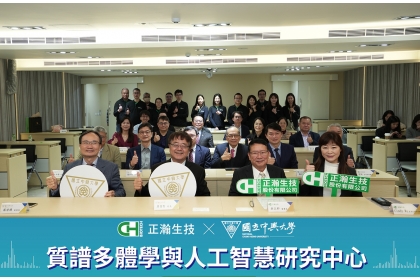
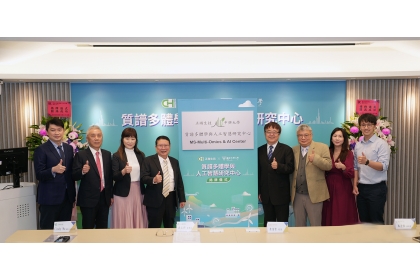
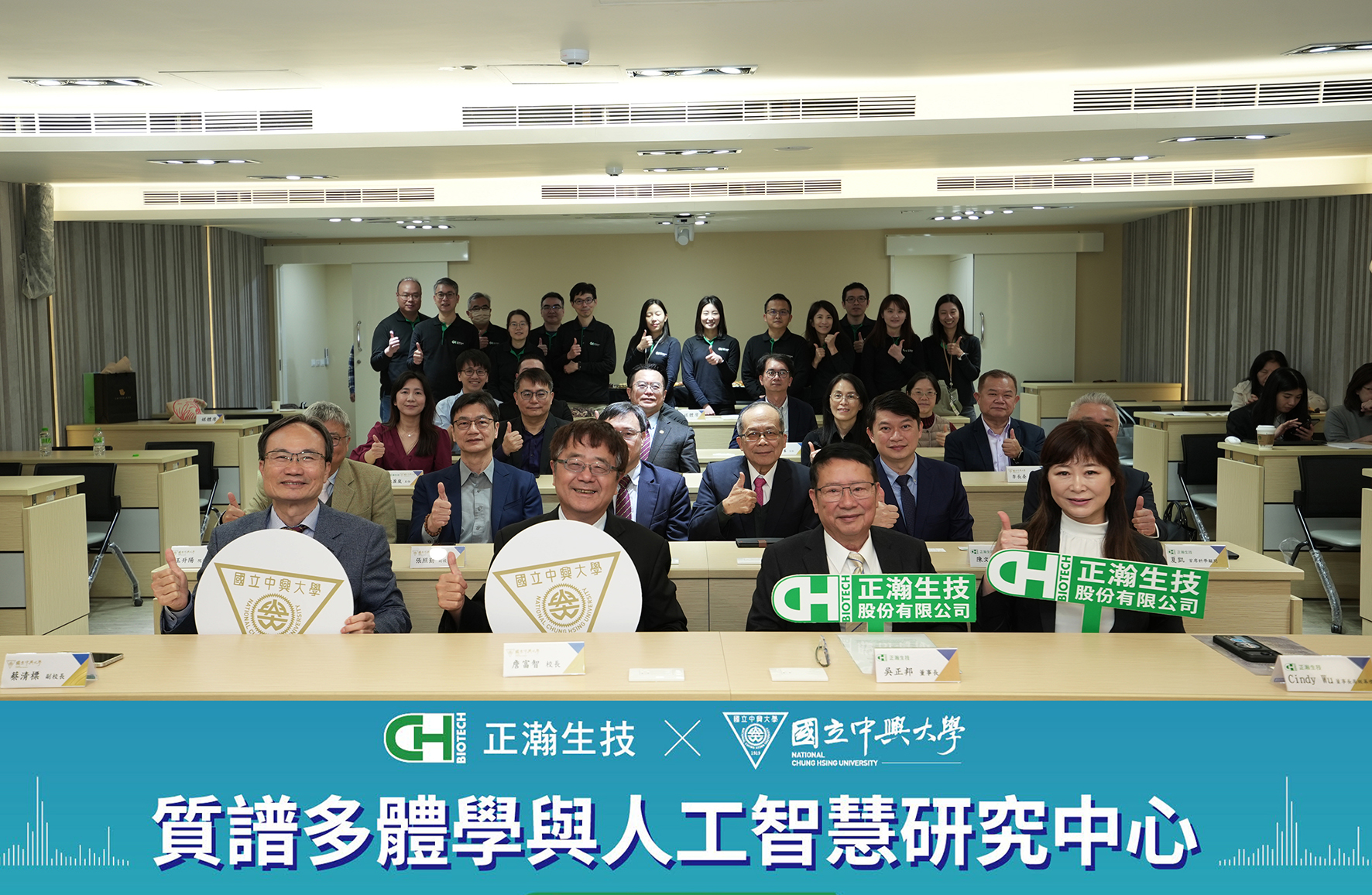
In response to the growing impacts of global warming and increasingly frequent climate anomalies on agricultural production, enhancing crop resilience to environmental stress has become a central challenge for sustainable agriculture worldwide. On January 29, National Chung Hsing University (NCHU) and CH Biotech held the inauguration ceremony of the Mass Spectrometry Multi-omics and Artificial Intelligence Research Center (hereafter referred to as the MS-AI Center) at the NCHU College of Circular Economy, officially launching the world’s first research center dedicated to agricultural sustainability and crop climate resilience through mass spectrometry and artificial intelligence.
The inauguration ceremony was jointly hosted by NCHU President Fuh-Jyh Jan and CH Biotech Chairman Danny Wu. CH Biotech has committed USD 5 million as core research funding for the center, demonstrating the company’s long-term commitment to sustainable agriculture and to advancing frontier scientific research in close collaboration with academia. The MS-AI Center will be directed by Professor Ying-Lan Chen, a leading expert in mass spectrometry–based multi-omics. Together with CH Biotech, the center will establish an integrated multi-omics and AI analytics platform tailored to three major crop resilience systems. Through core peptide identification, stress-related metabolic pathway analysis, lipid signaling modeling, and functional prediction, the center aims to transform agricultural R&D from experience-driven approaches into data-driven, scientifically validated, and quantitatively actionable precision agriculture solutions.
Addressing Climate Change Through Science-Based Crop Resilience
According to the Food and Agriculture Organization of the United Nations (FAO) and the Intergovernmental Panel on Climate Change (IPCC), climate variability has become a major factor affecting crop yield, quality, and physiological performance. A growing international consensus recognizes that only by strengthening crops’ intrinsic climate resilience can sustainable agriculture with high productivity and low environmental burden be achieved under constrained resources.
The MS-AI Center was established in response to this global challenge. By integrating high-resolution molecular analysis with artificial intelligence, the center aims to build a quantitative and predictive scientific foundation for crop stress responses, providing systematic solutions for the future of climate-resilient agriculture.
High-Resolution Mass Spectrometry × Artificial Intelligence:
Building a World-Leading R&D Platform
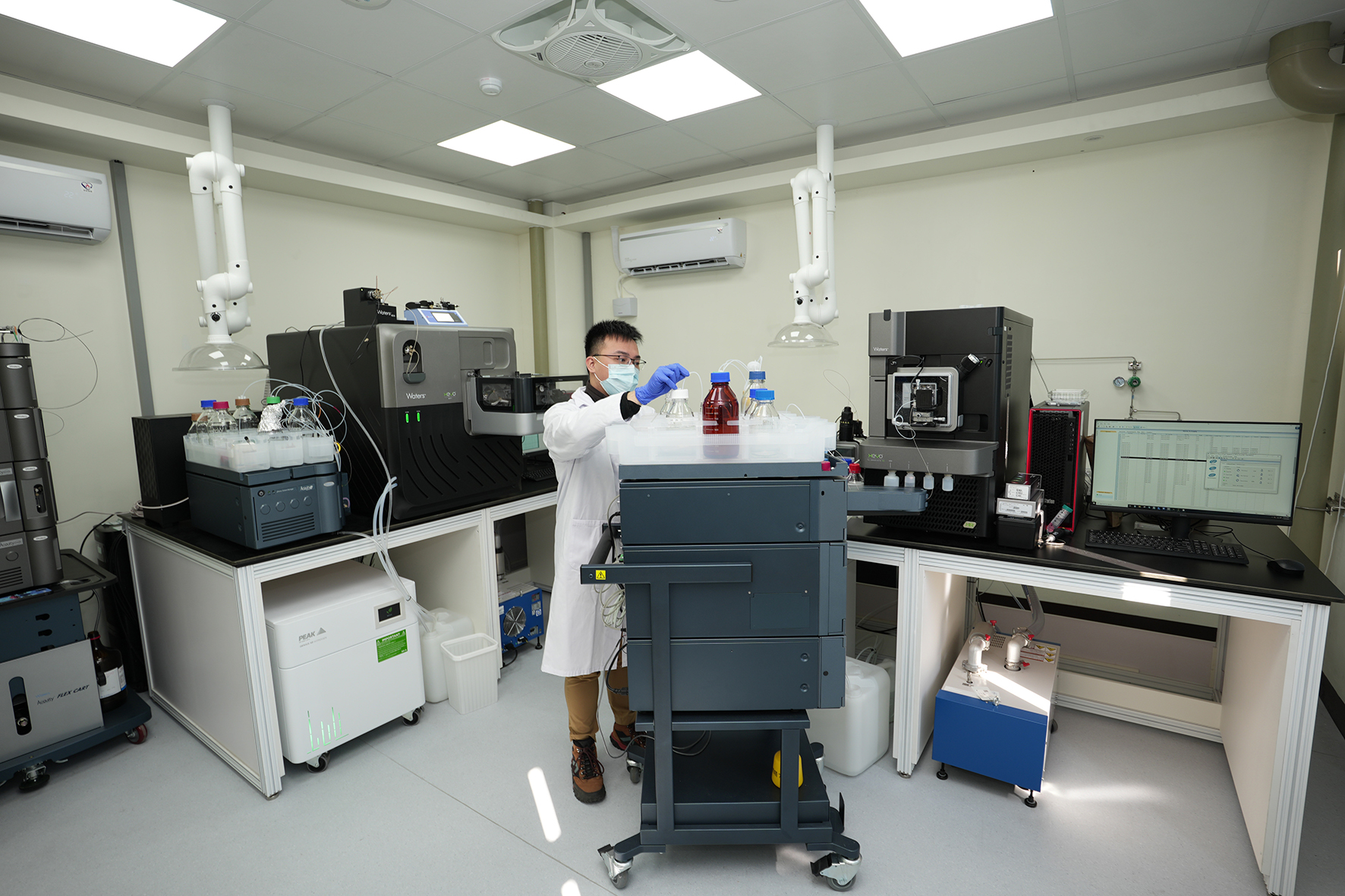
The MS-AI Center will deploy more than four high-performance liquid chromatography–tandem mass spectrometry (LC-MS/MS) systems comparable to those used at leading national research institutes. These instruments will support integrated multi-omics platforms, including peptidomics, metabolomics, lipidomics, and proteomics. Combined with AI-driven predictive models, the center will establish a complete R&D pipeline spanning molecular characterization, functional prediction, experimental validation, and field application.
This marks the first global initiative to systematically integrate MS–based multi-omics with AI for crop climate resilience research, laying a critical foundation for the standardization, scientific rigor, and internationalization of crop stress biology.
AI-Driven R&D to Accelerate the Development of Agricultural Innovations
As the cost and time required for agrochemical development continue to rise, the average agricultural product now requires more than 12 years and over USD 300 million to reach the market, with R&D representing the largest investment. To overcome the bottlenecks of high cost and long development cycles, CH Biotech has partnered with interdisciplinary experts to establish an AI-driven R&D platform that integrates peptidome, oligosaccharide, lipidomic, metabolomic, and proteomic databases.
By decoding complex plant molecular signaling networks, this platform enables the rapid and precise identification of high-potential bioactive molecules. Through the MS-AI Center, high-resolution mass spectrometry allows precise identification of complex peptide sequences, enabling the construction of proprietary molecular databases. AI models are then applied for sequence similarity analysis and functional prediction, extending known molecules to new functions and uncovering the biological potential of previously unknown molecules.
From Molecular Prediction to Field Validation:
Advancing Precision Climate-Resilient Agriculture
CH Biotech has already successfully developed a first-generation AI prediction model. From an initial pool of 856 candidate peptide sequences, the model identified 117 peptides with predicted stress-resilience potential, many of which show high similarity to endogenous plant peptides. These peptides were synthesized and tested under abiotic stress conditions, with results demonstrating enhanced recovery and growth in major crops such as soybean and maize following drought and low-temperature stress.
These peptide-based biostimulant products can be applied as early-warning and preparedness tools for crop stress, activating precise plant defense mechanisms before the onset of combined climate stresses. This approach offers a novel solution for precision climate-resilient agriculture.
Industry–Academia Collaboration to Strengthen Sustainability and Global Competitiveness
Looking ahead, CH Biotech will continue to deepen its collaboration with National Chung Hsing University. Through the integrated application of mass spectrometry–based multi-omics and artificial intelligence, the partnership will accelerate the R&D and commercialization of next-generation agricultural inputs, expand global market presence, and enhance Taiwan’s international competitiveness in sustainable and smart agriculture.
The MS-AI Center will advance Taiwan’s agricultural technology ecosystem across four strategic pillars: R&D innovation, intelligent decision-making, interdisciplinary talent development, and circular sustainability. By accelerating product development through high-resolution mass spectrometry and AI, establishing predictive models for crop stress responses, cultivating expertise in multi-omics and AI, and leveraging agricultural by-products to develop green bioactive compounds, the center aims to realize a truly circular agricultural economy.
The inauguration ceremony was jointly hosted by NCHU President Fuh-Jyh Jan and CH Biotech Chairman Danny Wu. CH Biotech has committed USD 5 million as core research funding for the center, demonstrating the company’s long-term commitment to sustainable agriculture and to advancing frontier scientific research in close collaboration with academia. The MS-AI Center will be directed by Professor Ying-Lan Chen, a leading expert in mass spectrometry–based multi-omics. Together with CH Biotech, the center will establish an integrated multi-omics and AI analytics platform tailored to three major crop resilience systems. Through core peptide identification, stress-related metabolic pathway analysis, lipid signaling modeling, and functional prediction, the center aims to transform agricultural R&D from experience-driven approaches into data-driven, scientifically validated, and quantitatively actionable precision agriculture solutions.
Addressing Climate Change Through Science-Based Crop Resilience
According to the Food and Agriculture Organization of the United Nations (FAO) and the Intergovernmental Panel on Climate Change (IPCC), climate variability has become a major factor affecting crop yield, quality, and physiological performance. A growing international consensus recognizes that only by strengthening crops’ intrinsic climate resilience can sustainable agriculture with high productivity and low environmental burden be achieved under constrained resources.
The MS-AI Center was established in response to this global challenge. By integrating high-resolution molecular analysis with artificial intelligence, the center aims to build a quantitative and predictive scientific foundation for crop stress responses, providing systematic solutions for the future of climate-resilient agriculture.
High-Resolution Mass Spectrometry × Artificial Intelligence:
Building a World-Leading R&D Platform
The MS-AI Center will deploy more than four high-performance liquid chromatography–tandem mass spectrometry (LC-MS/MS) systems comparable to those used at leading national research institutes. These instruments will support integrated multi-omics platforms, including peptidomics, metabolomics, lipidomics, and proteomics. Combined with AI-driven predictive models, the center will establish a complete R&D pipeline spanning molecular characterization, functional prediction, experimental validation, and field application.
This marks the first global initiative to systematically integrate MS–based multi-omics with AI for crop climate resilience research, laying a critical foundation for the standardization, scientific rigor, and internationalization of crop stress biology.
AI-Driven R&D to Accelerate the Development of Agricultural Innovations
As the cost and time required for agrochemical development continue to rise, the average agricultural product now requires more than 12 years and over USD 300 million to reach the market, with R&D representing the largest investment. To overcome the bottlenecks of high cost and long development cycles, CH Biotech has partnered with interdisciplinary experts to establish an AI-driven R&D platform that integrates peptidome, oligosaccharide, lipidomic, metabolomic, and proteomic databases.
By decoding complex plant molecular signaling networks, this platform enables the rapid and precise identification of high-potential bioactive molecules. Through the MS-AI Center, high-resolution mass spectrometry allows precise identification of complex peptide sequences, enabling the construction of proprietary molecular databases. AI models are then applied for sequence similarity analysis and functional prediction, extending known molecules to new functions and uncovering the biological potential of previously unknown molecules.
From Molecular Prediction to Field Validation:
Advancing Precision Climate-Resilient Agriculture
CH Biotech has already successfully developed a first-generation AI prediction model. From an initial pool of 856 candidate peptide sequences, the model identified 117 peptides with predicted stress-resilience potential, many of which show high similarity to endogenous plant peptides. These peptides were synthesized and tested under abiotic stress conditions, with results demonstrating enhanced recovery and growth in major crops such as soybean and maize following drought and low-temperature stress.
These peptide-based biostimulant products can be applied as early-warning and preparedness tools for crop stress, activating precise plant defense mechanisms before the onset of combined climate stresses. This approach offers a novel solution for precision climate-resilient agriculture.
Industry–Academia Collaboration to Strengthen Sustainability and Global Competitiveness
Looking ahead, CH Biotech will continue to deepen its collaboration with National Chung Hsing University. Through the integrated application of mass spectrometry–based multi-omics and artificial intelligence, the partnership will accelerate the R&D and commercialization of next-generation agricultural inputs, expand global market presence, and enhance Taiwan’s international competitiveness in sustainable and smart agriculture.
The MS-AI Center will advance Taiwan’s agricultural technology ecosystem across four strategic pillars: R&D innovation, intelligent decision-making, interdisciplinary talent development, and circular sustainability. By accelerating product development through high-resolution mass spectrometry and AI, establishing predictive models for crop stress responses, cultivating expertise in multi-omics and AI, and leveraging agricultural by-products to develop green bioactive compounds, the center aims to realize a truly circular agricultural economy.
Strengthening Crop Climate Resilience Through Science NCHU and CH Biotech Launch the World’s First Mass Spectrometry & AI Center for Sustainable Agriculture

Strengthening Crop Climate Resilience Through Science NCHU and CH Biotech Launch the World’s First Mass Spectrometry & AI Center for Sustainable Agriculture