

Termites: Pest becoming international concern
2026-03-13
興新聞張貼者
Unit秘書室
1,592
Source:2026-3-13/nongnghiepmoitruong/Hoai Tho - Kien Trung
(VAN) More than 40 termite species have been classified as dangerous and require preventive measures to ensure the safety of infrastructure and works in Viet Nam.
Research on termite control in the Pacific Rim
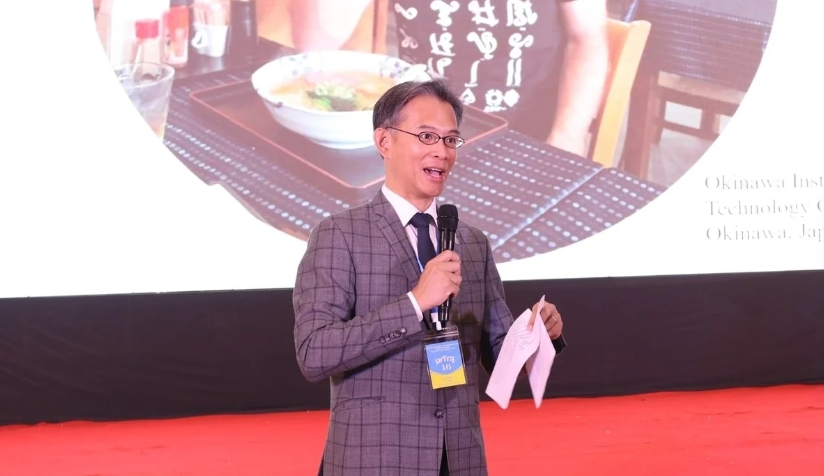
On March 12–13, 2026, the Institute of Ecology and Works Protection under the Viet Nam Academy for Water Resources (VAWR), in collaboration with international organizations, organized the 16th Pacific Rim Termite Research Group (PRTRG) Conference in Hanoi.
The conference was attended by nearly 150 scientists, experts, and businesses from many countries, including Australia, China, France, Hong Kong, Indonesia, Japan, Malaysia, the Philippines, Singapore, Taiwan, Thailand, and the U.S.
In his opening remarks, Prof. Dr. Tran Dinh Hoa, Director of VAWR, said that this year's conference has the theme "Termites in a Changing World: Climate Change, Pest Invasion, and Strategic Control Solutions." With more than 30 scientific reports and 10 posters presenting research findings, the event is considered an important academic forum for scientists to share their latest research results while discussing challenges in the fields of biology, ecology, and termite management.
According to Prof. Hoa, this is the second time the Institute of Ecology and Works Protection has coordinated with international partners to organize a PRTRG conference in Viet Nam. For delegates who attended the conference in Hanoi in 2012, this return offers an opportunity to witness the city's development as well as the expansion of scientific cooperation in the region.
Speaking at the conference, Prof. Dr. Hou-Feng Li, President of PRTRG, said that one of the network's key objectives is to create a bridge between scientists and termite control professionals.
Through PRTRG, researchers have the opportunity to gain practical experience from units directly handling termite infestations in the field, while termite control professionals can also update the latest scientific advances in termite biology and management.
According to Prof. Li, PRTRG is currently one of the most reputable international forums in the field of termite research and control, bringing together the world's leading organizations and scientists.
In addition, climate change is significantly altering the distribution of many termite species globally. As temperatures rise, termites tend to expand their habitats from tropical and subtropical regions toward northern areas, while also moving from lowlands to higher elevations. At the same time, urbanization and population growth are increasing the risk of termite damage, as construction activities continue to expand into areas that were previously less affected.
The President of PRTRG noted that termite research and control in Viet Nam has made significant progress over the past decade. The number of recorded termite species has increased by nearly 90% compared to previous records, reflecting clear advances in surveys and biodiversity research on this insect group.
Aiming at sustainable termite control solutions
According to Assoc. Prof. Dr. Nguyen Quoc Huy, Director of the Institute of Ecology and Works Protection, termites are among the most dangerous pest groups affecting dikes, dams, construction works, historical and cultural relics, as well as various types of crops.
Among the termite species recorded in Viet Nam, more than 40 have been classified as pests that require preventive measures to ensure the safety of protected works.
In response to this situation, the Institute of Ecology and Works Protection has focused on studying the biological and ecological characteristics of termites, developing solutions for early detection of termite invasion, and controlling them by effective and environmentally friendly products. To date, the Institute has successfully developed four termite control products. These products have been officially registered, commercialized, and approved for use in Viet Nam.
In the coming time, the Institute will continue to promote the application of artificial intelligence and information technology to early detect termite invasion, thereby minimizing risks to infrastructure works. At the same time, scientists are researching integrated advanced geophysical solutions for surveying and detecting termite nests in dikes and dams, as well as developing environmentally friendly bait technologies toward safe and sustainable control.
Regarding biodiversity, Assoc. Prof. Dr. Nguyen Van Quang (University of Science—Viet Nam National University, Hanoi) added that termites play an important role in tropical ecosystems by participating in the decomposition of organic matter and soil turnover and contributing to the carbon-nitrogen cycle.
During the 2021–2025 period, scientists collected over 3,000 termite samples from national parks and nature reserves nationwide. The results identified 282 termite species belonging to 46 genera and seven families, including 31 species recorded in Viet Nam for the first time.
According to scientists, the studies presented at the conference help update new trends in termite research and management worldwide, while also opening up opportunities for scientific cooperation in the region. Through the PRTRG network, scientists, pest control experts, and businesses have opportunities to connect, exchange experience, and promote effective termite management solutions in the context of climate change.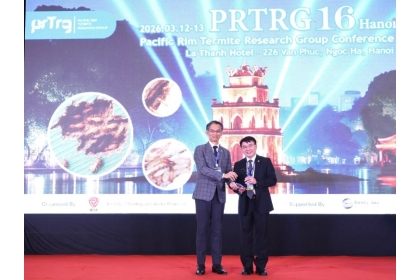
(VAN) More than 40 termite species have been classified as dangerous and require preventive measures to ensure the safety of infrastructure and works in Viet Nam.
Research on termite control in the Pacific Rim
On March 12–13, 2026, the Institute of Ecology and Works Protection under the Viet Nam Academy for Water Resources (VAWR), in collaboration with international organizations, organized the 16th Pacific Rim Termite Research Group (PRTRG) Conference in Hanoi.
The conference was attended by nearly 150 scientists, experts, and businesses from many countries, including Australia, China, France, Hong Kong, Indonesia, Japan, Malaysia, the Philippines, Singapore, Taiwan, Thailand, and the U.S.
In his opening remarks, Prof. Dr. Tran Dinh Hoa, Director of VAWR, said that this year's conference has the theme "Termites in a Changing World: Climate Change, Pest Invasion, and Strategic Control Solutions." With more than 30 scientific reports and 10 posters presenting research findings, the event is considered an important academic forum for scientists to share their latest research results while discussing challenges in the fields of biology, ecology, and termite management.
According to Prof. Hoa, this is the second time the Institute of Ecology and Works Protection has coordinated with international partners to organize a PRTRG conference in Viet Nam. For delegates who attended the conference in Hanoi in 2012, this return offers an opportunity to witness the city's development as well as the expansion of scientific cooperation in the region.
Speaking at the conference, Prof. Dr. Hou-Feng Li, President of PRTRG, said that one of the network's key objectives is to create a bridge between scientists and termite control professionals.
Through PRTRG, researchers have the opportunity to gain practical experience from units directly handling termite infestations in the field, while termite control professionals can also update the latest scientific advances in termite biology and management.
According to Prof. Li, PRTRG is currently one of the most reputable international forums in the field of termite research and control, bringing together the world's leading organizations and scientists.
In addition, climate change is significantly altering the distribution of many termite species globally. As temperatures rise, termites tend to expand their habitats from tropical and subtropical regions toward northern areas, while also moving from lowlands to higher elevations. At the same time, urbanization and population growth are increasing the risk of termite damage, as construction activities continue to expand into areas that were previously less affected.
The President of PRTRG noted that termite research and control in Viet Nam has made significant progress over the past decade. The number of recorded termite species has increased by nearly 90% compared to previous records, reflecting clear advances in surveys and biodiversity research on this insect group.
Aiming at sustainable termite control solutions
According to Assoc. Prof. Dr. Nguyen Quoc Huy, Director of the Institute of Ecology and Works Protection, termites are among the most dangerous pest groups affecting dikes, dams, construction works, historical and cultural relics, as well as various types of crops.
Among the termite species recorded in Viet Nam, more than 40 have been classified as pests that require preventive measures to ensure the safety of protected works.
In response to this situation, the Institute of Ecology and Works Protection has focused on studying the biological and ecological characteristics of termites, developing solutions for early detection of termite invasion, and controlling them by effective and environmentally friendly products. To date, the Institute has successfully developed four termite control products. These products have been officially registered, commercialized, and approved for use in Viet Nam.
In the coming time, the Institute will continue to promote the application of artificial intelligence and information technology to early detect termite invasion, thereby minimizing risks to infrastructure works. At the same time, scientists are researching integrated advanced geophysical solutions for surveying and detecting termite nests in dikes and dams, as well as developing environmentally friendly bait technologies toward safe and sustainable control.
Regarding biodiversity, Assoc. Prof. Dr. Nguyen Van Quang (University of Science—Viet Nam National University, Hanoi) added that termites play an important role in tropical ecosystems by participating in the decomposition of organic matter and soil turnover and contributing to the carbon-nitrogen cycle.
During the 2021–2025 period, scientists collected over 3,000 termite samples from national parks and nature reserves nationwide. The results identified 282 termite species belonging to 46 genera and seven families, including 31 species recorded in Viet Nam for the first time.
According to scientists, the studies presented at the conference help update new trends in termite research and management worldwide, while also opening up opportunities for scientific cooperation in the region. Through the PRTRG network, scientists, pest control experts, and businesses have opportunities to connect, exchange experience, and promote effective termite management solutions in the context of climate change.
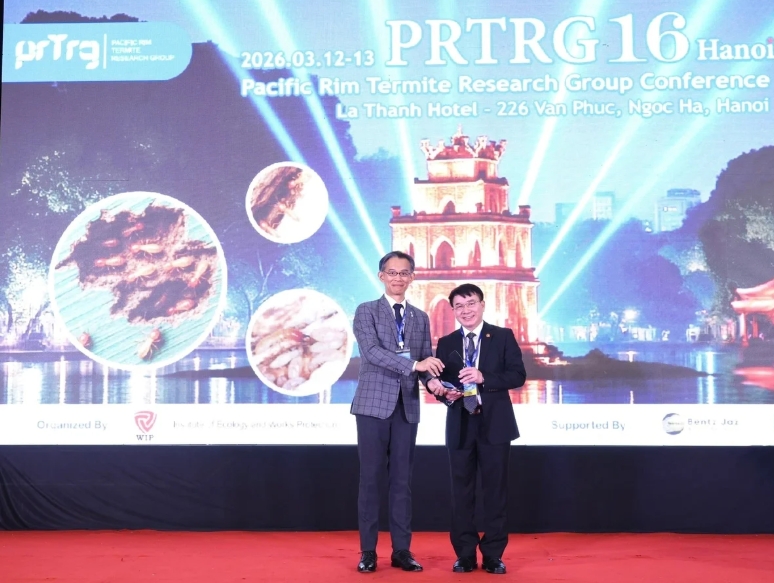
Prof. Dr. Hou-Feng Li, President of PRTRG, presents a commemorative plaque to Prof. Dr. Tran Dinh Hoa, Director of VAWR. Photo: Hoai Tho.
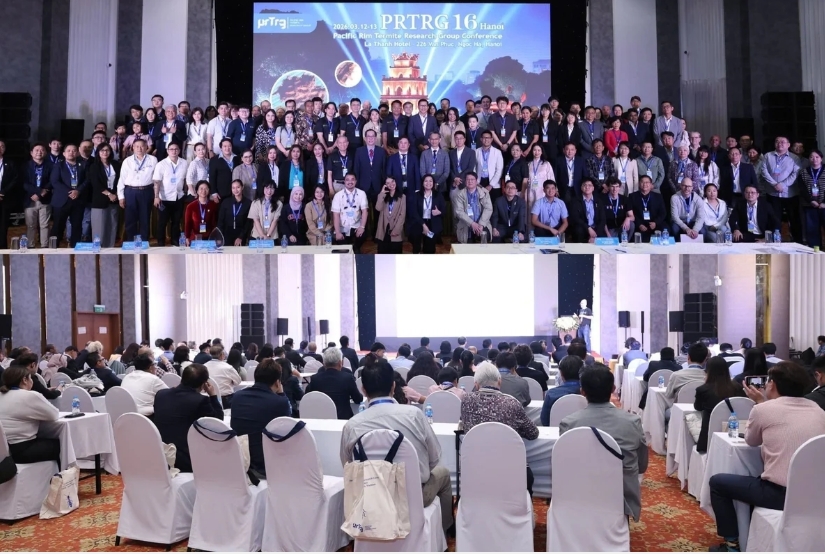
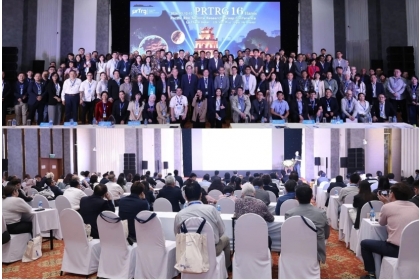
An overview of the 16th Pacific Rim Termite Research Group (PRTRG) Conference held in Hanoi, attracting more than 150 scientists and international experts. Photo: Hoai Tho.