

Pokémon's virtual citizen science taught Australian entomology how to catch 'em all
2026-03-13
興新聞張貼者
Unit秘書室
1,929
Suroce:2026-3-13/ABC News/Francisco Dominguez
Pokémon Red and Blue came out in Japan 30 years ago.
The humble black-and-white Game Boy games — plus the Japan-only Green — introduced us to Pikachu and 150 other cute anime monsters, and started a series which reportedly overtook Disney as the world's highest-grossing franchise.
Pokémon's creator, Satoshi Tajiri, was inspired by his childhood as a hobbyist entomologist, hunting Japanese rhinoceros beetles in Tokyo's rural outskirts.
A playground phenomenon that became an enduring commercial juggernaut, at heart his most famous work is about citizen science, a project to catalogue and conserve virtual ecology.
Emerging from a fascination with the natural world, it's no surprise Pokémon has left its mark on Australian entomology.
Yun Hsiao, now assistant professor at National Chung Hsing University's Department of Entomology, mirrored Tajiri as a five-year-old. He spent his childhood with a net in hand, looking for insects in Taiwan's undergrowth.
"It was similar to Pokémon," he says, remembering the days when fieldwork was much less complicated," Dr Hsiao says.
"You just go to the grass and swipe your nets and find some insects."
His introduction to the First Generation, the first 151 Pokémon introduced in 1996's Pokémon Red and Blue, cemented a lifelong love of entomology that led to a PhD at ANU.
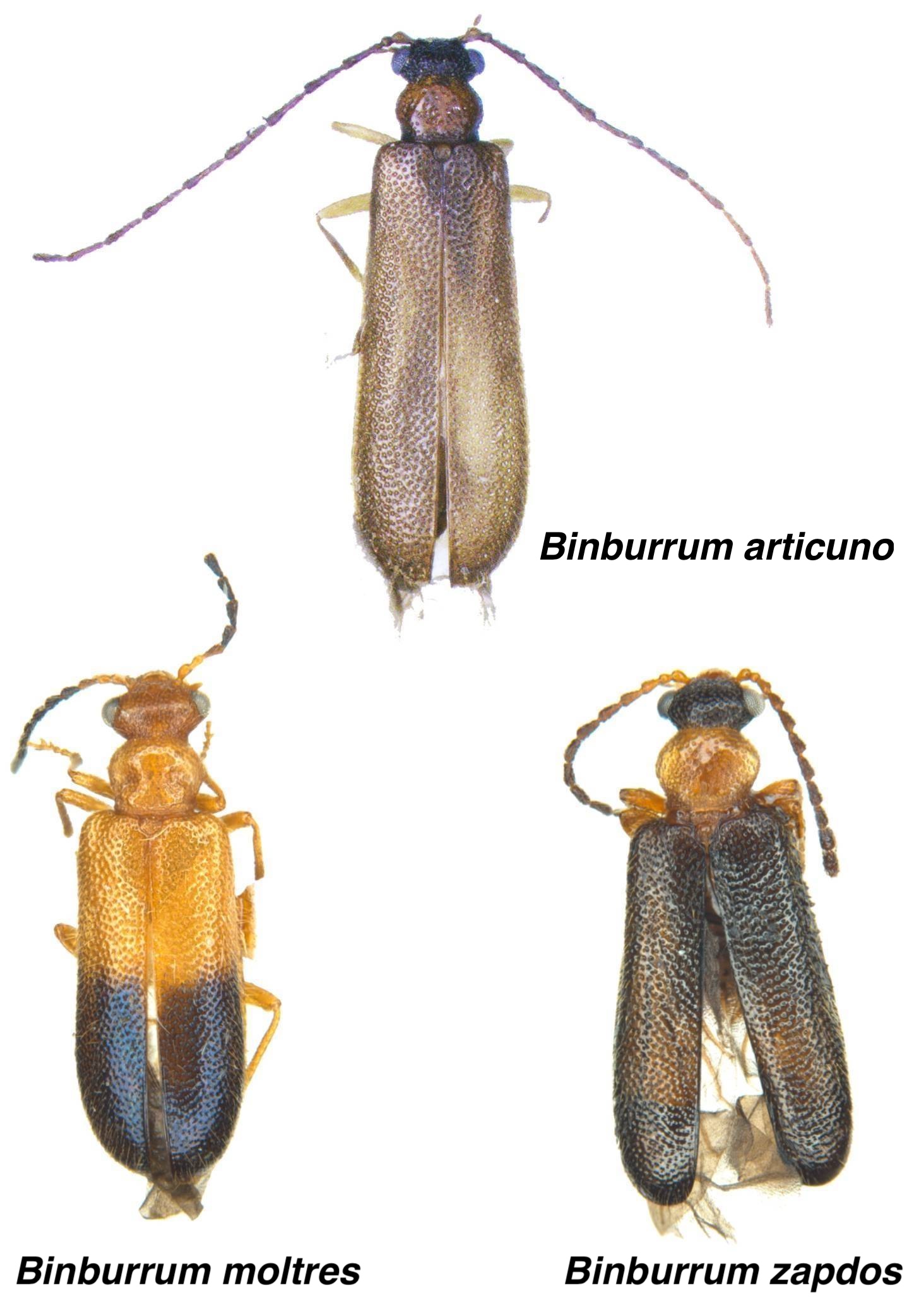
a scientific image of three different types of bugs
Three endemic Australian beetles discovered by Yun Hsiao in CSIRO's Australian National Insect Collection. (Supplied: Yun Hsiao)
While studying Australian fire-coloured beetles in CSIRO's Australian National Insect Collection in Canberra, Dr Hsiao noticed three intriguing species entirely new to science.
Confirming the rare discovery in 2021 with Professor Darren Pollack from Eastern New Mexico University, he wanted their names to stand out.
Due to their obscure rarity he named them after Pokémon's three legendary birds: one-of-a-kind quasi-mystical monsters called Articuno, Moltres and Zapdos.
Most insect discoveries, estimated at 6,000 a year globally by the University of Arizona, pass without comment. But the Pokémon connection made Binburrum articuno, Binburrum moltres, and Binburrum zapdos unlikely superstars of the insect world.
They made international headlines. Fans created Pokémon designs inspired by his beetles. One British student even produced a beautifully illustrated risograph zine as a university project, which they later mailed to him.
He still keeps it at his desk — alongside stickers of the legendary birds — as a memento to science's far-reaching impact.
"Science can be more than science," Dr Hsiao says.
"Science can inspire people to be creative and mix with pop culture."
Stag beetles weren't found near his childhood home — their distinct antler-like mandibles fascinated him since he first sighted one. His favourite pocket monster is Pokémon's equivalent: the bug-type Pinsir.
One of the series' first designs by Game Freak co-founder and artist Ken Sugimori, standing 1.5 metres tall with vicious vice grip and guillotine attacks, Pinsir is somewhat more imposing than the real thing.
Not all entomologists are Poké-fans. While Dr Hsiao meets many who share his love for the series, drawn to its simplified implementation of evolution and natural selection, other sub-disciplines don't share that affinity.
"Entomology is a wide subject. I study biodiversity, systematics and evolution, so naturally, I have an interest in Pokémon," he says.
"But some of my colleagues study how to kill insects, like agricultural pests. There's no way for them to have an interest in Pokémon!"
Although he infrequently has time to play Pokémon, the series remains a staple in his National Chung Hsing University's cultural entomology course, which studies the interrelations between insects and human culture and language.
Pokémon was inspired by real insect biology. Now, our conceptions of real insects, like Dr Hsiao's trio, are shaped by Pokémon's world.
Dr Bryan "The Fly Guy" Lessard is an entomologist and author of the kid's book Eyes on Flies. He might have followed another path if he hadn't watched the Pokémon anime on Cheez TV.
"Pokémon really laid the road map for me to become an entomologist and a taxonomist," says Dr Lessard, who's come a long way since his childhood feeding tadpoles lettuce in the Illawarra.
"When I look back at watching Pokémon, the things I loved were exploring these different towns, meeting quirky Pokemon and the people that live there, and seeing the landscapes. And it's exactly the same when I do a field trip."
As well as the original 151 Pokémon, the original Game Boy games introduced the Pokédex. A quintessentially 90s digital encyclopedia, Pokémon trainers use it to log each creature they find in a global scientific network.
Dr Lessard believes Game Freak predicted the future of citizen science with the Pokédex.
Boosted by Pokémon Go's popularity, which also drew Gen Z to birdwatching, smartphone apps like i-Naturalist now allow anyone to log an insect sighting, upload research-grade observations, and even take part in the official discovery.
When Dr Lessard says only 25 per cent of Australian insects are known to science, entomologists like him need all the help they can get to catch 'em all.
"Australian scientists are naming about 500 species each year that are new to science," says Dr Lessard.
"We're continuously building our understanding of the species that are out there, that kind of exploration and discovery.
"In Pokémon, it's very exciting, but it's not fantasy, it's reality."
Pokémon always touched on reality. Pokémon Red and Blue came out the same year Dolly the clone sheep was born.
In Mewtwo, a tortured clone Pokemon grown in a lab, the series posed ethical questions about genetically modified animals.
Meanwhile, "trainers" are locked in perennial battle with Team Rocket, a villainous anti-PETA group that stands for cruelty against animals and reckless habitat destruction.
"I think Pokémon's legacy is really just inspiring respect for biodiversity," says Dr Lessard.
It's a legacy Dr Lessard is continuing, using Pokémon to teach kids how to apply taxonomic principles like dichotomous keys to classify Butterfree and Cutiefly before tackling the subtler differences between native Australian flies.
Dr Lessard's favourite is Cutiefly, an adorable Bug-type introduced later in 2019's Pokémon Sword and Shield.
"I was shocked to learn Cutiefly is based on a real-life species [Anastoechus nitidulus] in Japan," he says.
"It's this fluffy yellow bee fly, a bee mimic. The females lay their eggs and bowl them down spider burrows. The larvae eat the spider from inside out.
"Put them side by side, Cutiefly and the real life species, they look identical!"
"It's funny how Pokémon's inspired by nature, but nature is pretty amazing in its own right as well."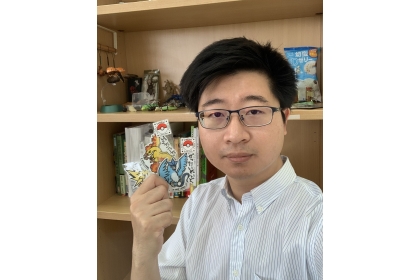
Pokémon Red and Blue came out in Japan 30 years ago.
The humble black-and-white Game Boy games — plus the Japan-only Green — introduced us to Pikachu and 150 other cute anime monsters, and started a series which reportedly overtook Disney as the world's highest-grossing franchise.
Pokémon's creator, Satoshi Tajiri, was inspired by his childhood as a hobbyist entomologist, hunting Japanese rhinoceros beetles in Tokyo's rural outskirts.
A playground phenomenon that became an enduring commercial juggernaut, at heart his most famous work is about citizen science, a project to catalogue and conserve virtual ecology.
Emerging from a fascination with the natural world, it's no surprise Pokémon has left its mark on Australian entomology.
Yun Hsiao, now assistant professor at National Chung Hsing University's Department of Entomology, mirrored Tajiri as a five-year-old. He spent his childhood with a net in hand, looking for insects in Taiwan's undergrowth.
"It was similar to Pokémon," he says, remembering the days when fieldwork was much less complicated," Dr Hsiao says.
"You just go to the grass and swipe your nets and find some insects."
His introduction to the First Generation, the first 151 Pokémon introduced in 1996's Pokémon Red and Blue, cemented a lifelong love of entomology that led to a PhD at ANU.
a scientific image of three different types of bugs
Three endemic Australian beetles discovered by Yun Hsiao in CSIRO's Australian National Insect Collection. (Supplied: Yun Hsiao)
While studying Australian fire-coloured beetles in CSIRO's Australian National Insect Collection in Canberra, Dr Hsiao noticed three intriguing species entirely new to science.
Confirming the rare discovery in 2021 with Professor Darren Pollack from Eastern New Mexico University, he wanted their names to stand out.
Due to their obscure rarity he named them after Pokémon's three legendary birds: one-of-a-kind quasi-mystical monsters called Articuno, Moltres and Zapdos.
Most insect discoveries, estimated at 6,000 a year globally by the University of Arizona, pass without comment. But the Pokémon connection made Binburrum articuno, Binburrum moltres, and Binburrum zapdos unlikely superstars of the insect world.
They made international headlines. Fans created Pokémon designs inspired by his beetles. One British student even produced a beautifully illustrated risograph zine as a university project, which they later mailed to him.
He still keeps it at his desk — alongside stickers of the legendary birds — as a memento to science's far-reaching impact.
"Science can be more than science," Dr Hsiao says.
"Science can inspire people to be creative and mix with pop culture."
Stag beetles weren't found near his childhood home — their distinct antler-like mandibles fascinated him since he first sighted one. His favourite pocket monster is Pokémon's equivalent: the bug-type Pinsir.
One of the series' first designs by Game Freak co-founder and artist Ken Sugimori, standing 1.5 metres tall with vicious vice grip and guillotine attacks, Pinsir is somewhat more imposing than the real thing.
Not all entomologists are Poké-fans. While Dr Hsiao meets many who share his love for the series, drawn to its simplified implementation of evolution and natural selection, other sub-disciplines don't share that affinity.
"Entomology is a wide subject. I study biodiversity, systematics and evolution, so naturally, I have an interest in Pokémon," he says.
"But some of my colleagues study how to kill insects, like agricultural pests. There's no way for them to have an interest in Pokémon!"
Although he infrequently has time to play Pokémon, the series remains a staple in his National Chung Hsing University's cultural entomology course, which studies the interrelations between insects and human culture and language.
Pokémon was inspired by real insect biology. Now, our conceptions of real insects, like Dr Hsiao's trio, are shaped by Pokémon's world.
Dr Bryan "The Fly Guy" Lessard is an entomologist and author of the kid's book Eyes on Flies. He might have followed another path if he hadn't watched the Pokémon anime on Cheez TV.
"Pokémon really laid the road map for me to become an entomologist and a taxonomist," says Dr Lessard, who's come a long way since his childhood feeding tadpoles lettuce in the Illawarra.
"When I look back at watching Pokémon, the things I loved were exploring these different towns, meeting quirky Pokemon and the people that live there, and seeing the landscapes. And it's exactly the same when I do a field trip."
As well as the original 151 Pokémon, the original Game Boy games introduced the Pokédex. A quintessentially 90s digital encyclopedia, Pokémon trainers use it to log each creature they find in a global scientific network.
Dr Lessard believes Game Freak predicted the future of citizen science with the Pokédex.
Boosted by Pokémon Go's popularity, which also drew Gen Z to birdwatching, smartphone apps like i-Naturalist now allow anyone to log an insect sighting, upload research-grade observations, and even take part in the official discovery.
When Dr Lessard says only 25 per cent of Australian insects are known to science, entomologists like him need all the help they can get to catch 'em all.
"Australian scientists are naming about 500 species each year that are new to science," says Dr Lessard.
"We're continuously building our understanding of the species that are out there, that kind of exploration and discovery.
"In Pokémon, it's very exciting, but it's not fantasy, it's reality."
Pokémon always touched on reality. Pokémon Red and Blue came out the same year Dolly the clone sheep was born.
In Mewtwo, a tortured clone Pokemon grown in a lab, the series posed ethical questions about genetically modified animals.
Meanwhile, "trainers" are locked in perennial battle with Team Rocket, a villainous anti-PETA group that stands for cruelty against animals and reckless habitat destruction.
"I think Pokémon's legacy is really just inspiring respect for biodiversity," says Dr Lessard.
It's a legacy Dr Lessard is continuing, using Pokémon to teach kids how to apply taxonomic principles like dichotomous keys to classify Butterfree and Cutiefly before tackling the subtler differences between native Australian flies.
Dr Lessard's favourite is Cutiefly, an adorable Bug-type introduced later in 2019's Pokémon Sword and Shield.
"I was shocked to learn Cutiefly is based on a real-life species [Anastoechus nitidulus] in Japan," he says.
"It's this fluffy yellow bee fly, a bee mimic. The females lay their eggs and bowl them down spider burrows. The larvae eat the spider from inside out.
"Put them side by side, Cutiefly and the real life species, they look identical!"
"It's funny how Pokémon's inspired by nature, but nature is pretty amazing in its own right as well."
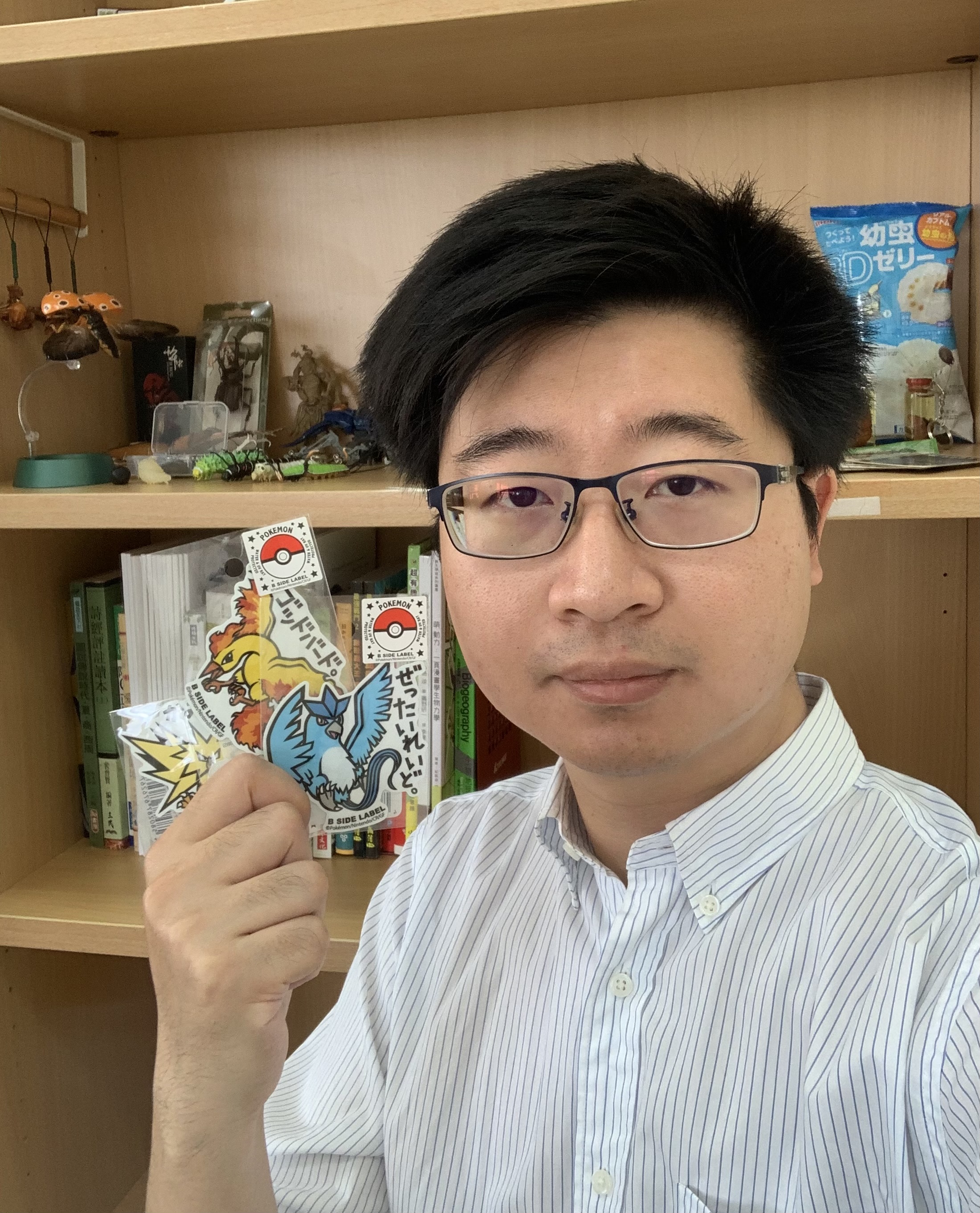
Entomologist Dr Yun Hsiao named three Australian beetles after Pokémon in 2021, turning them into unlikely superstars. (Supplied: Yun Hsiao)