

NCHU Team Combines AI and High-Entropy Materials to Speed Up Green Hydrogen Catalyst Development Featured on the Cover of 《ACS Catalysis》
2026-03-31
興新聞張貼者
Unit秘書室
1,787
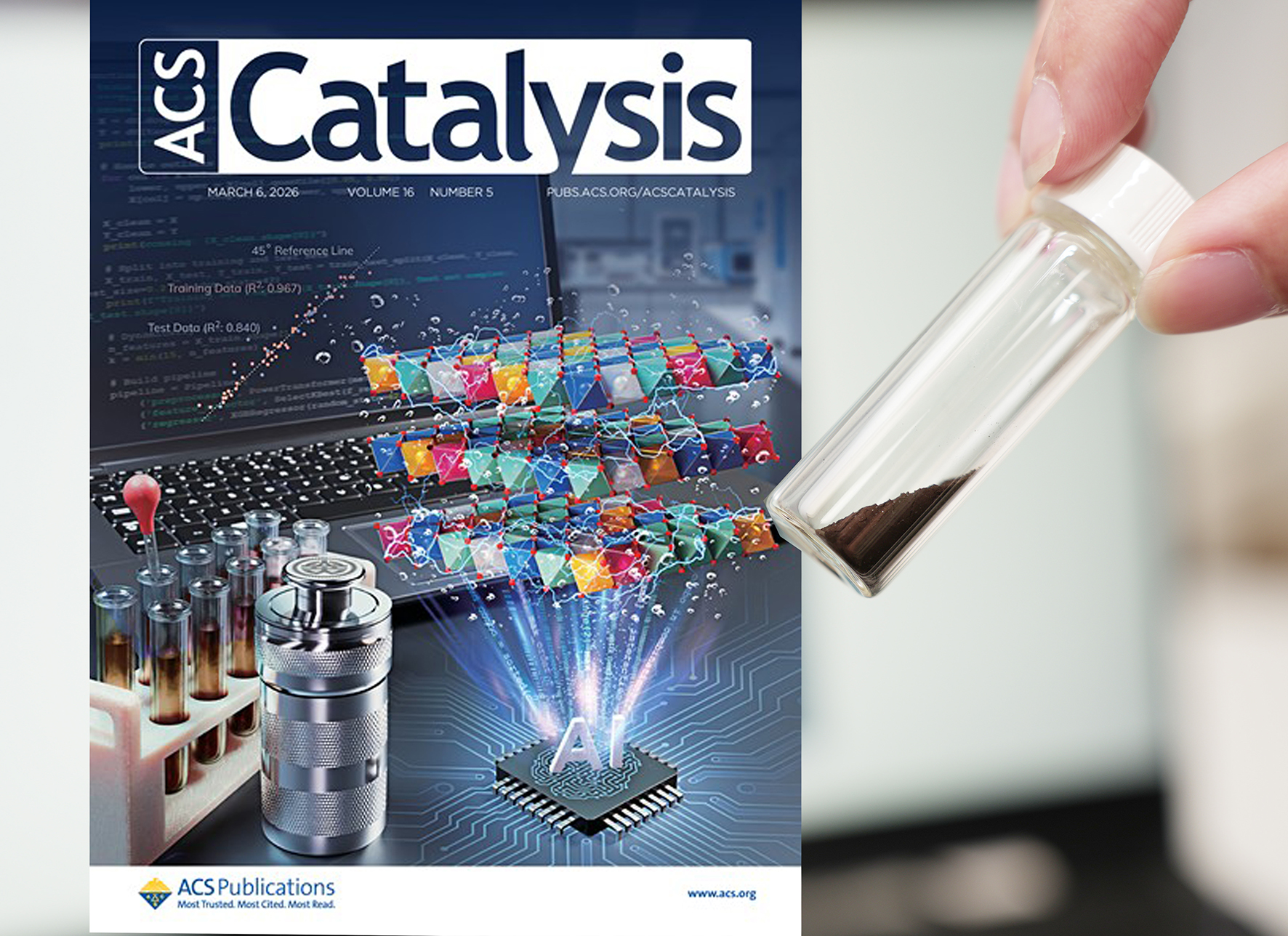
Facing the urgent demand for net-zero carbon emissions and the transition to green energy, accelerating the development of hydrogen energy technologies has become a critical issue. The interdisciplinary team from the Smart Sustainable New Agriculture Research Center (SMARTer) at National Chung Hsing University has successfully integrated artificial intelligence with high-entropy materials to establish an optimized model for catalytic materials. This innovation drastically shortens the traditional trial-and-error research and development process by approximately 99.3%. The achievement was featured on the cover of the prestigious international journal ACS Catalysis, a highly influential academic journal published by the American Chemical Society, with an impact factor of 13.1 as announced in 2025.
In recent years, “high-entropy materials” have been emerged as a major breakthrough in the field of materials science and represent a milestone achievement for Taiwan in the history of global materials development. Their development has drawn attention from the U.S. Department of Energy, Oak Ridge National Laboratory, and researchers worldwide. Academician Jien-Wei Yeh of Academia Sinica, the inventor of high-entropy materials and recipient of the 2025 Presidential Science Prize, has predicted that catalyst materials synthesized based on the high-entropy concept may replace precious metals and become a promising solution for future green energy applications, such as hydrogen production through water electrolysis. However, because high-entropy materials involve numerous metallic elements and highly complex compositional combinations, it remains a major research challenge to quickly identify the optimal formulation from among countless possibilities.
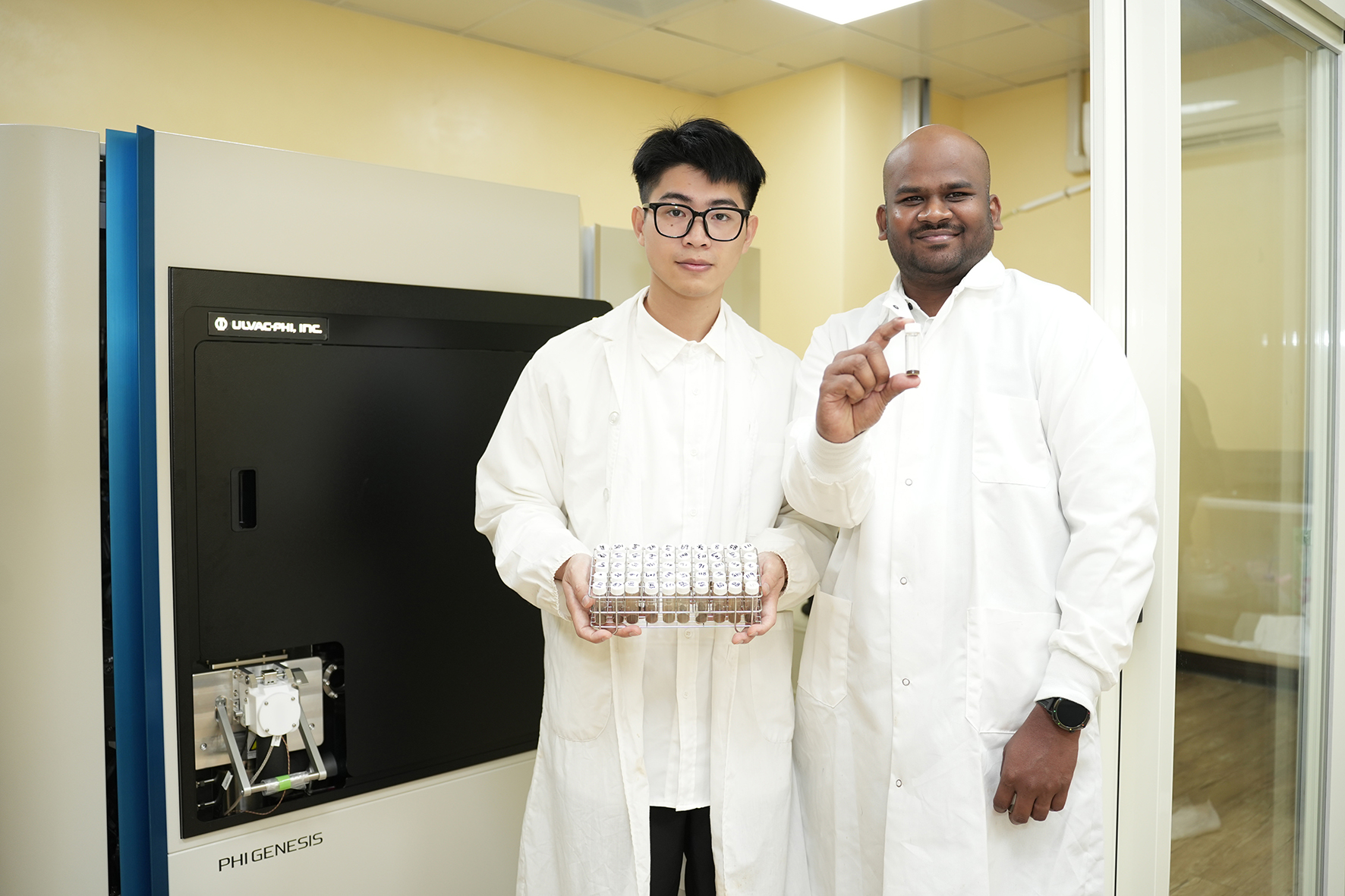
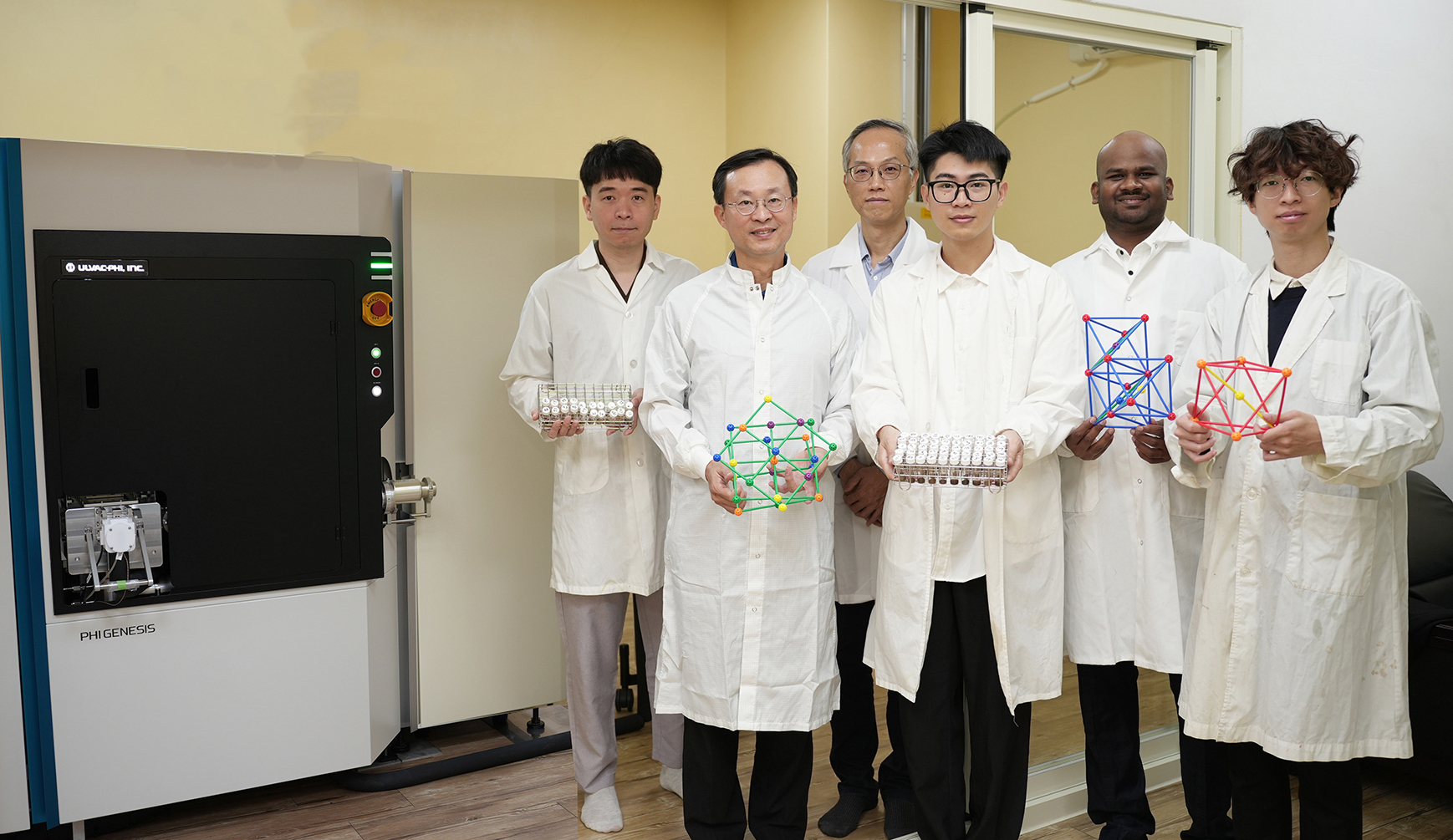
To overcome this bottleneck, the Center for Intelligent and Sustainable New Agriculture Development at National Chung Hsing University, under the leadership of interdisciplinary scholars including Dean of the College of Engineering Distinguished Professor Ming-Der Yang, Associate Dean Distinguished Professor Chih-Ming Chen, and Assistant Professor Hung-Chung Li, developed an “optimization model” for high-entropy materials. The work was carried out by first author Dr. Chandrasekaran Pitchai, a postdoctoral researcher, together with master’s student Chao-Fang Huang, by successfully integrating artificial intelligence and machine learning algorithms with catalyst synthesis technology.
By leveraging the unique structure of layered double hydroxides (LDHs), the research team successfully applied high-entropy materials to electrocatalytic water-splitting technology, significantly improving the efficiency of hydrogen production from water splitting. In this study, XGBoost was used to construct a predictive model for analyzing the optimal proportions of five metallic elements (iron, cobalt, chromium, manganese, and copper). The model was capable of predicting the performance of 10,626 high-entropy material combinations within a short period of time, with a prediction error of only about 3%. Compared with traditional approaches that rely heavily on extensive synthesis and experimental testing, the model saved approximately 99.3% of the development time, significantly accelerating the optimization of electrocatalytic materials.
In addition, the team trained the model using 70 sets of experimentally collected data measured in their own laboratory, thereby avoiding uncertainties caused by discrepancies among data collected from different publications. This further enhanced the accuracy and reliability of the model and became another highlight of the study.
Distinguished Professor Chih-Ming Chen emphasized that this research demonstrates the potential of integrating advanced materials with artificial intelligence through interdisciplinary collaboration, helping accelerate the design, development, and application of high-entropy materials while further improving their feasibility for industrialization. Assistant Professor Hung-Chung Li stated that even with a small dataset, the model was still able to identify key and well-defined features in complex material systems, demonstrating great promise for future applications.
Distinguished Professor Dean Ming-Der Yang expressed gratitude for the support provided by the National Science and Technology Council through its Frontier Division “Artificial Intelligence (AI) Project.” He added that the research team will continue introducing AI technologies into the development of advanced materials. In the future, they plan to integrate these efforts with smart agriculture by using renewable energy such as solar panels installed on farms or greenhouses to produce hydrogen through water electrolysis, thereby providing hydrogen energy that is sustainable and carbon-free. This is expected to serve as a core solution for energy self-sufficiency in remote areas and for the development of resilient agriculture.
DOI:https://doi.org/10.1021/acscatal.5c07303
In recent years, “high-entropy materials” have been emerged as a major breakthrough in the field of materials science and represent a milestone achievement for Taiwan in the history of global materials development. Their development has drawn attention from the U.S. Department of Energy, Oak Ridge National Laboratory, and researchers worldwide. Academician Jien-Wei Yeh of Academia Sinica, the inventor of high-entropy materials and recipient of the 2025 Presidential Science Prize, has predicted that catalyst materials synthesized based on the high-entropy concept may replace precious metals and become a promising solution for future green energy applications, such as hydrogen production through water electrolysis. However, because high-entropy materials involve numerous metallic elements and highly complex compositional combinations, it remains a major research challenge to quickly identify the optimal formulation from among countless possibilities.
To overcome this bottleneck, the Center for Intelligent and Sustainable New Agriculture Development at National Chung Hsing University, under the leadership of interdisciplinary scholars including Dean of the College of Engineering Distinguished Professor Ming-Der Yang, Associate Dean Distinguished Professor Chih-Ming Chen, and Assistant Professor Hung-Chung Li, developed an “optimization model” for high-entropy materials. The work was carried out by first author Dr. Chandrasekaran Pitchai, a postdoctoral researcher, together with master’s student Chao-Fang Huang, by successfully integrating artificial intelligence and machine learning algorithms with catalyst synthesis technology.
By leveraging the unique structure of layered double hydroxides (LDHs), the research team successfully applied high-entropy materials to electrocatalytic water-splitting technology, significantly improving the efficiency of hydrogen production from water splitting. In this study, XGBoost was used to construct a predictive model for analyzing the optimal proportions of five metallic elements (iron, cobalt, chromium, manganese, and copper). The model was capable of predicting the performance of 10,626 high-entropy material combinations within a short period of time, with a prediction error of only about 3%. Compared with traditional approaches that rely heavily on extensive synthesis and experimental testing, the model saved approximately 99.3% of the development time, significantly accelerating the optimization of electrocatalytic materials.
In addition, the team trained the model using 70 sets of experimentally collected data measured in their own laboratory, thereby avoiding uncertainties caused by discrepancies among data collected from different publications. This further enhanced the accuracy and reliability of the model and became another highlight of the study.
Distinguished Professor Chih-Ming Chen emphasized that this research demonstrates the potential of integrating advanced materials with artificial intelligence through interdisciplinary collaboration, helping accelerate the design, development, and application of high-entropy materials while further improving their feasibility for industrialization. Assistant Professor Hung-Chung Li stated that even with a small dataset, the model was still able to identify key and well-defined features in complex material systems, demonstrating great promise for future applications.
Distinguished Professor Dean Ming-Der Yang expressed gratitude for the support provided by the National Science and Technology Council through its Frontier Division “Artificial Intelligence (AI) Project.” He added that the research team will continue introducing AI technologies into the development of advanced materials. In the future, they plan to integrate these efforts with smart agriculture by using renewable energy such as solar panels installed on farms or greenhouses to produce hydrogen through water electrolysis, thereby providing hydrogen energy that is sustainable and carbon-free. This is expected to serve as a core solution for energy self-sufficiency in remote areas and for the development of resilient agriculture.
DOI:https://doi.org/10.1021/acscatal.5c07303
NCHU Team Combines AI and High-Entropy Materials to Speed Up Green Hydrogen Catalyst Development Featured on the Cover of 《ACS Catalysis》
NCHU Team Combines AI and High-Entropy Materials to Speed Up Green Hydrogen Catalyst Development Featured on the Cover of 《ACS Catalysis》