

NCHU Sparks New Energy in Arts Education! InSEA Asia Regional Congress 2026 “Interweaving and Co-Creation: Diverse Pathways of Arts Education” Inspires Artistic and Cultural Innovation at NCHU
2026-05-19
興新聞張貼者
Unit秘書室
1,565
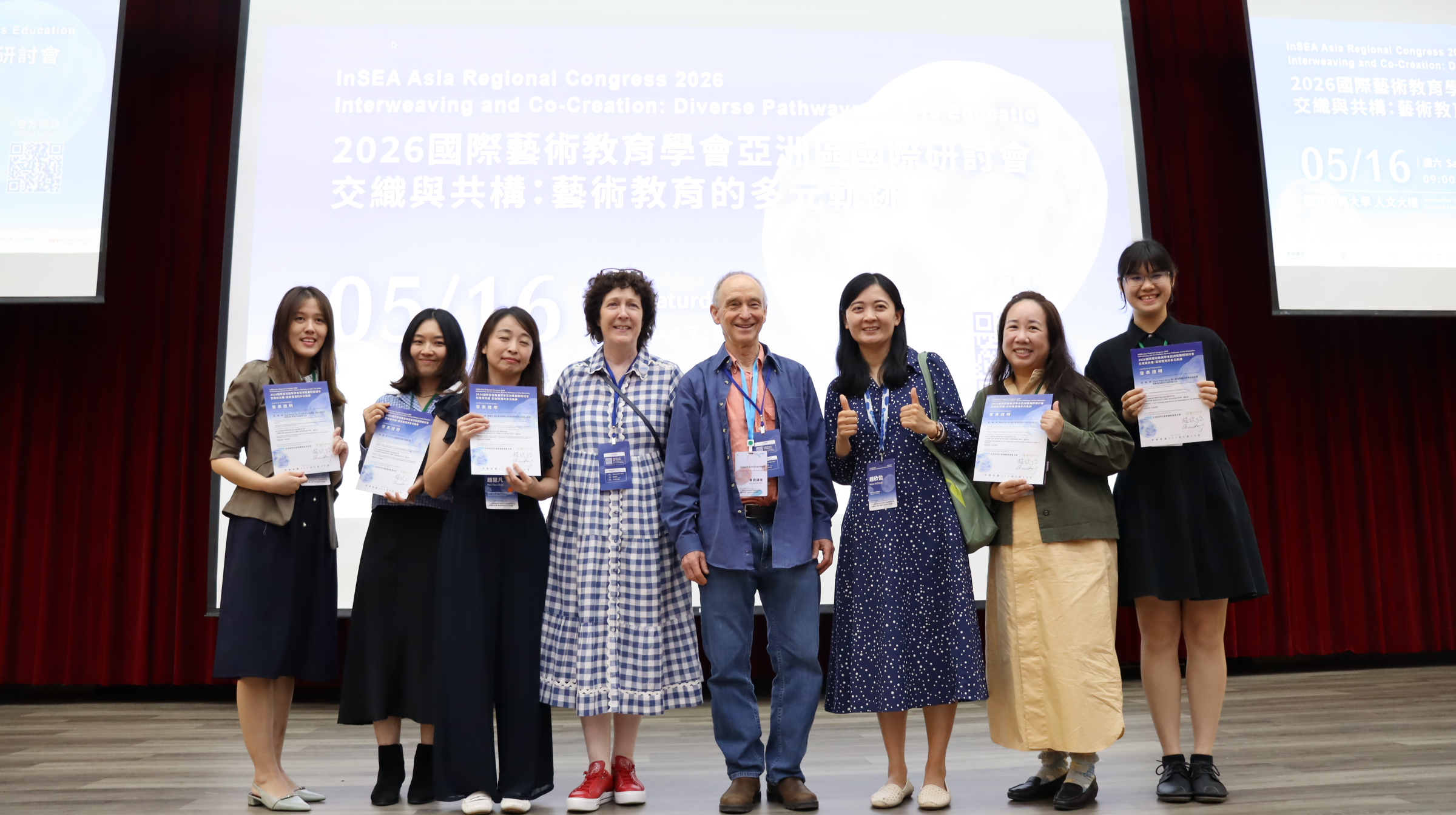
Co-organized by National Chung Hsing University and National Changhua University of Education, the International Society for Education through Art (InSEA) Asia Regional Congress 2026, themed “Interweaving and Co-Creation: Diverse Pathways of Arts Education,” was successfully held in Taiwan on May 15–16. Returning to Taiwan for the first time in 25 years, the congress attracted nearly 200 arts education scholars, researchers, practitioners, and students from across Asia, Europe, the Americas, and beyond.
The second day of the congress took place at the College of Liberal Arts Building of National Chung Hsing University. The program opened with a multilingual a cappella performance by the NCHU student vocal group “Mystery Loop,” creating a lively and welcoming atmosphere. Opening remarks were delivered by InSEA President Patsey Bodkin, who emphasized that “Education through Art” is a core philosophy of contemporary arts education. In an era shaped by globalization, technological transformation, and increasingly diverse societies, arts education is no longer merely technical training, but a powerful force for promoting cultural understanding, civic awareness, and social participation.
International scholars attending the congress further noted that transnational and cross-cultural exchanges enable new forms of dialogue and collaboration in arts education across different cultural contexts, helping to address the challenges of educational transformation and sustainable development. InSEA also recognized Taiwan’s active efforts in arts education, digital innovation, and social inclusion, affirming that this regional congress not only provided an international academic exchange platform, but also demonstrated the vitality and influence of Asian arts education communities in interdisciplinary collaboration and cultural co-creation.
In his remarks, the President of National Chung Hsing University stated that hosting the InSEA Asia Regional Congress 2026 in Taiwan and bringing together arts education scholars and practitioners from around the world carried significant international academic importance for the university. He noted that the congress theme, “Interweaving and Co-Creation,” responds to the contemporary shift in arts education from single-discipline approaches toward interdisciplinary integration. Arts education today increasingly extends into communities, museums, and digital platforms, forming dynamic connections among education, creative practice, research, and social engagement.
The President further emphasized that NCHU has long promoted digital humanities, cultural creativity, social responsibility, and international collaboration. This congress was organized by Associate Professor Hsin-Yi Chao from the Bachelor Program of Digital Humanities and Creative Industries and the Graduate Institute of Library and Information Science, who also guided interdisciplinary student participation throughout the event. Their involvement showcased the university’s achievements in integrating the humanities, technology, and social practice.
During the congress, many internationally renowned scholars were invited to deliver keynote speeches and participate in forum discussions, including InSEA President Patsey Bodkin and experts from the United Kingdom, Japan, South Korea, the United States, Egypt, and other countries. Exchanges took place through keynote lectures, oral presentations, and poster sessions. In addition to exploring future directions for arts education, participants engaged in in-depth discussions on issues such as cultural inclusion, creativity cultivation, interdisciplinary collaboration, and digital transformation in contemporary educational contexts.
Many attendees remarked that face-to-face discussions and interactions not only deepened their understanding of arts education practices in different countries, but also fostered future opportunities for international collaboration and research partnerships. The vibrant atmosphere throughout the congress fully reflected the energy of the global academic community.
Founded in 1954, International Society for Education through Art is an official partner organization of UNESCO dedicated to promoting arts education and cultural exchange worldwide. Hosting the Asia Regional Congress in Taiwan not only enhanced Taiwan’s international visibility in the field of arts education, but also strengthened research and practical collaboration networks across Asia.
Through this congress, researchers and educators from diverse cultural backgrounds were able to exchange ideas and share experiences, opening new possibilities for the future development of arts education. National Chung Hsing University believes that arts education not only cultivates creativity, but also promotes cross-cultural understanding, empathy, and social connection. Through this international exchange, NCHU hopes to foster a more inclusive and sustainable future for arts education. Building upon the foundation established by this congress, the university will continue promoting international academic collaboration and multicultural exchange, further deepening global connections among the fields of arts, humanities, and education.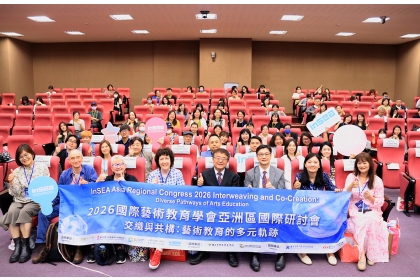
The second day of the congress took place at the College of Liberal Arts Building of National Chung Hsing University. The program opened with a multilingual a cappella performance by the NCHU student vocal group “Mystery Loop,” creating a lively and welcoming atmosphere. Opening remarks were delivered by InSEA President Patsey Bodkin, who emphasized that “Education through Art” is a core philosophy of contemporary arts education. In an era shaped by globalization, technological transformation, and increasingly diverse societies, arts education is no longer merely technical training, but a powerful force for promoting cultural understanding, civic awareness, and social participation.
International scholars attending the congress further noted that transnational and cross-cultural exchanges enable new forms of dialogue and collaboration in arts education across different cultural contexts, helping to address the challenges of educational transformation and sustainable development. InSEA also recognized Taiwan’s active efforts in arts education, digital innovation, and social inclusion, affirming that this regional congress not only provided an international academic exchange platform, but also demonstrated the vitality and influence of Asian arts education communities in interdisciplinary collaboration and cultural co-creation.
In his remarks, the President of National Chung Hsing University stated that hosting the InSEA Asia Regional Congress 2026 in Taiwan and bringing together arts education scholars and practitioners from around the world carried significant international academic importance for the university. He noted that the congress theme, “Interweaving and Co-Creation,” responds to the contemporary shift in arts education from single-discipline approaches toward interdisciplinary integration. Arts education today increasingly extends into communities, museums, and digital platforms, forming dynamic connections among education, creative practice, research, and social engagement.
The President further emphasized that NCHU has long promoted digital humanities, cultural creativity, social responsibility, and international collaboration. This congress was organized by Associate Professor Hsin-Yi Chao from the Bachelor Program of Digital Humanities and Creative Industries and the Graduate Institute of Library and Information Science, who also guided interdisciplinary student participation throughout the event. Their involvement showcased the university’s achievements in integrating the humanities, technology, and social practice.
During the congress, many internationally renowned scholars were invited to deliver keynote speeches and participate in forum discussions, including InSEA President Patsey Bodkin and experts from the United Kingdom, Japan, South Korea, the United States, Egypt, and other countries. Exchanges took place through keynote lectures, oral presentations, and poster sessions. In addition to exploring future directions for arts education, participants engaged in in-depth discussions on issues such as cultural inclusion, creativity cultivation, interdisciplinary collaboration, and digital transformation in contemporary educational contexts.
Many attendees remarked that face-to-face discussions and interactions not only deepened their understanding of arts education practices in different countries, but also fostered future opportunities for international collaboration and research partnerships. The vibrant atmosphere throughout the congress fully reflected the energy of the global academic community.
Founded in 1954, International Society for Education through Art is an official partner organization of UNESCO dedicated to promoting arts education and cultural exchange worldwide. Hosting the Asia Regional Congress in Taiwan not only enhanced Taiwan’s international visibility in the field of arts education, but also strengthened research and practical collaboration networks across Asia.
Through this congress, researchers and educators from diverse cultural backgrounds were able to exchange ideas and share experiences, opening new possibilities for the future development of arts education. National Chung Hsing University believes that arts education not only cultivates creativity, but also promotes cross-cultural understanding, empathy, and social connection. Through this international exchange, NCHU hopes to foster a more inclusive and sustainable future for arts education. Building upon the foundation established by this congress, the university will continue promoting international academic collaboration and multicultural exchange, further deepening global connections among the fields of arts, humanities, and education.
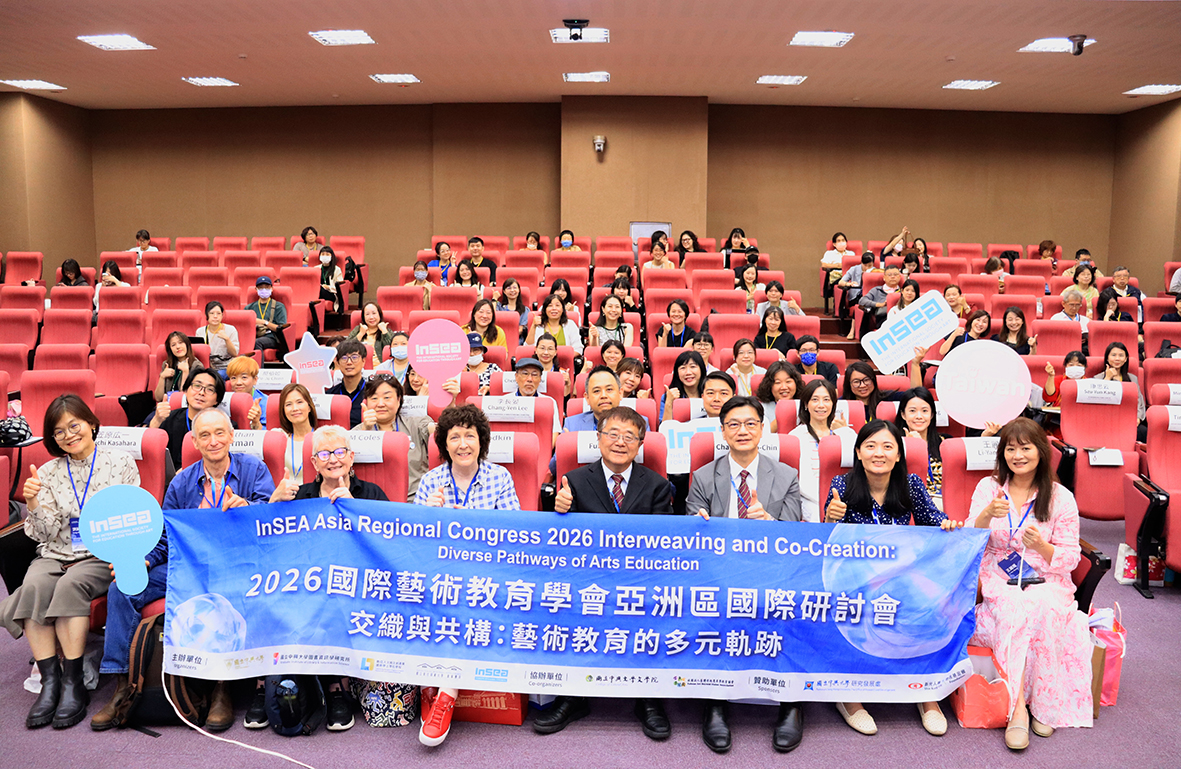
Group photo at the opening ceremony of the congress.
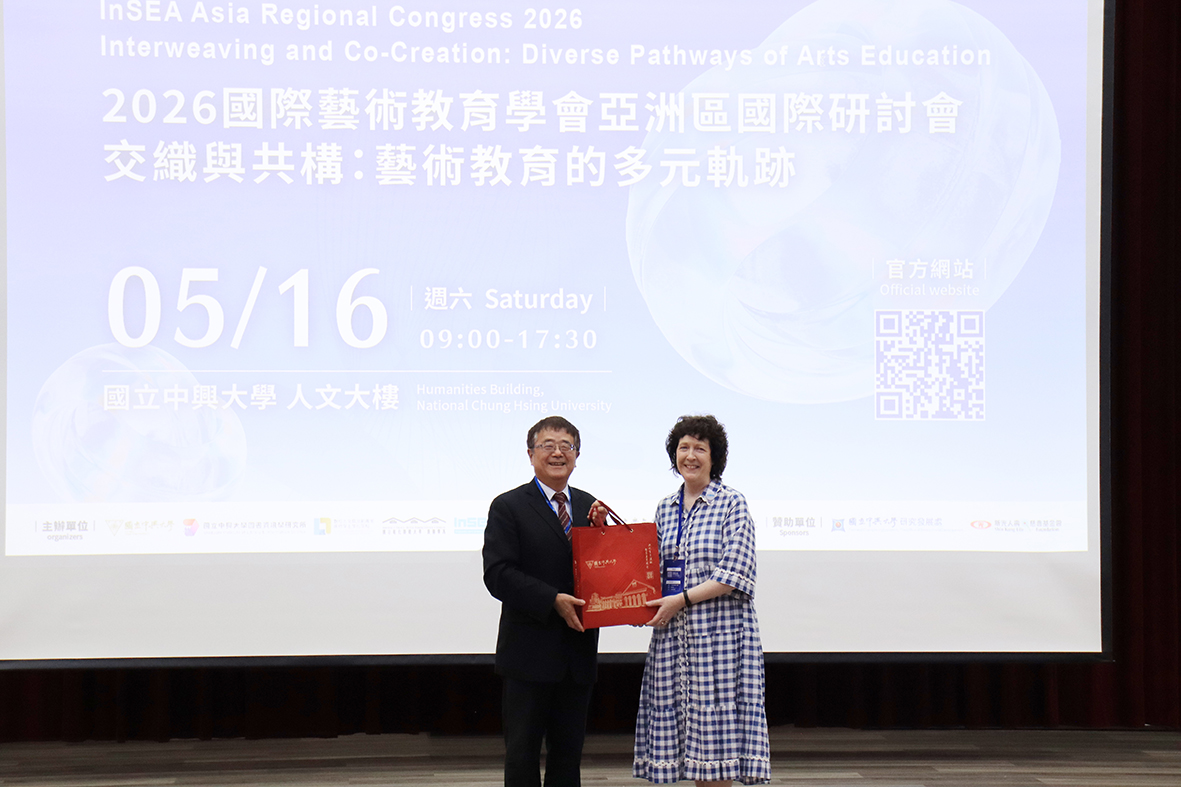
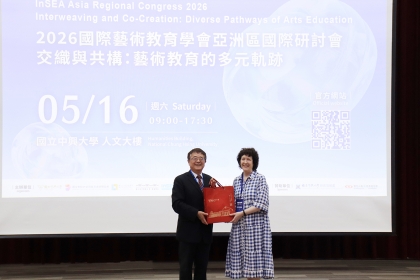
President Jan presented a commemorative gift from NCHU to InSEA President Patsey Bodkin.