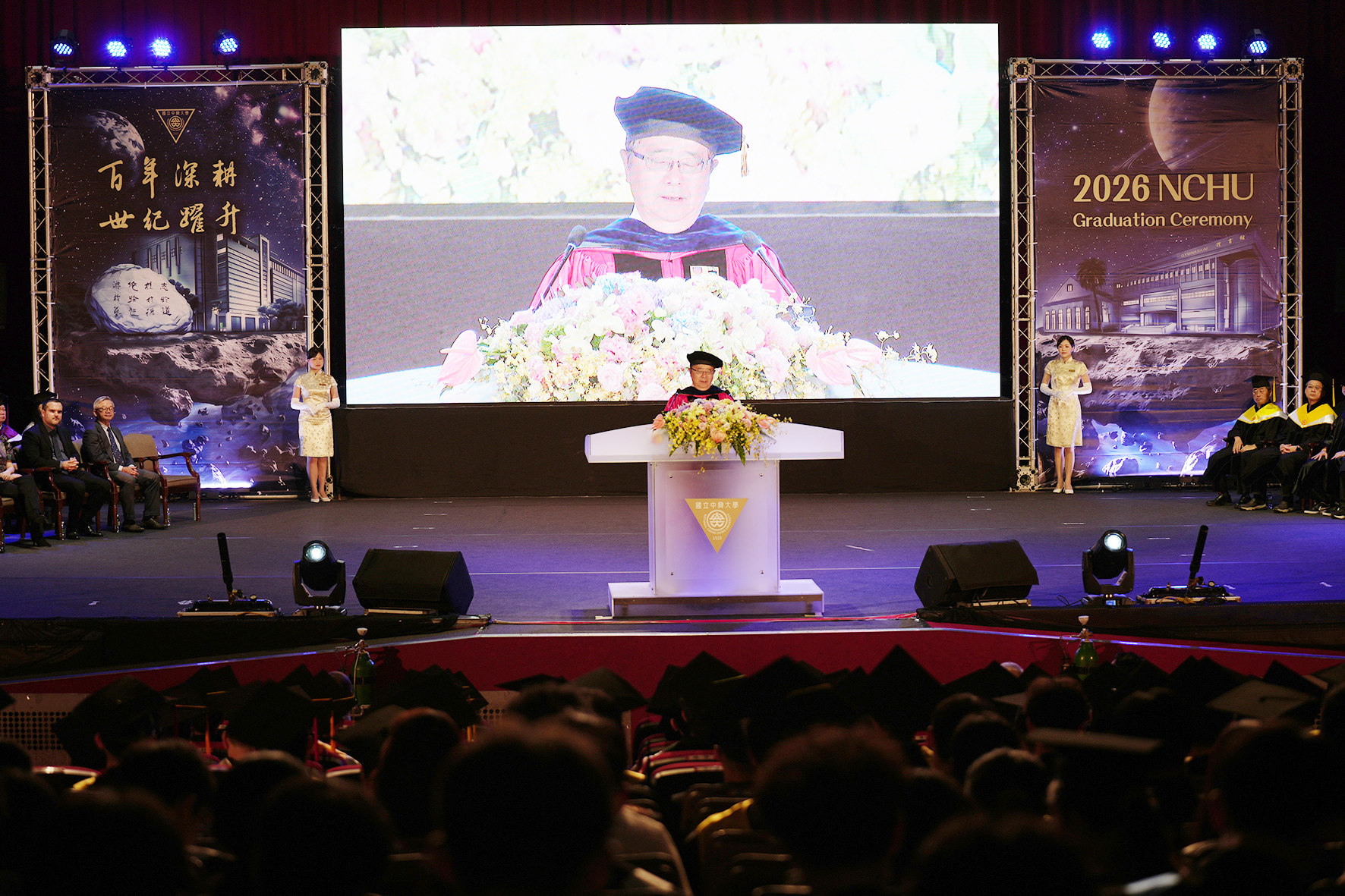


NCHU Commencement Celebrates 3,970 Graduates; NSTC Minister Wu Encourages Courage to Explore the Unknown
2026-06-01
興新聞張貼者
Unit秘書室
978
National Chung Hsing University (NCHU) held its 114th Academic Year Commencement Ceremony on the morning of May 30 at Hui-Sun Hall, celebrating the achievements of 3,970 graduates as they embark on a new chapter in life. The ceremony featured Minister Wu Cheng-Wen of the National Science and Technology Council (NSTC) as the keynote guest. Distinguished attendees also included Wágner Zsolt, Deputy Representative of the Hungarian Trade Office in Taipei, and Chuang Chia-Yu, Chairman of the NCHU Alumni Association, who joined graduates and their families in marking this important milestone.
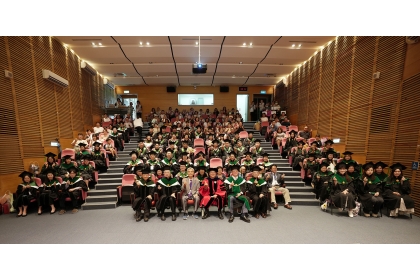
One of the highlights of this year’s commencement was the graduation of the inaugural class of NCHU’s College of Medicine. A total of 47 students completed their medical education, marking a significant milestone in the university’s development of medical education and reflecting its commitment to addressing Taiwan’s growing demand for healthcare professionals.
NCHU President Fuh-Jyh Jan noted that the graduation of the first medical cohort represents the university’s proactive response to societal needs. He encouraged graduates to continue cultivating independent thinking and sound judgment in an era of rapid artificial intelligence development, while facing future challenges with compassion, patience, and confidence.
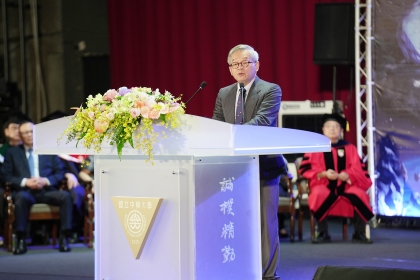
In his commencement address, Minister Wu emphasized that the most valuable outcome of a university education is not merely the attainment of a degree, but the development of independent thinking and a broader, deeper understanding of the world. He reminded graduates that learning does not end upon leaving campus; rather, lifelong learning and continuous professional development are essential for remaining competitive in a rapidly changing world.
To illustrate the value of perseverance and exploration, Wu cited the example of Nobel Prize-winning physicist Jack Kilby, inventor of the integrated circuit (IC). Shortly after joining Texas Instruments, Kilby used the company’s summer shutdown period to pursue independent research. Through countless experiments and setbacks, he ultimately created the world’s first integrated circuit, laying the foundation for a technological revolution that transformed modern society. Wu encouraged graduates to recognize that many of life’s most important directions are not apparent from the outset but emerge through continuous learning, exploration, and resilience in the face of adversity. Success, he noted, often begins with the courage to venture into the unknown.
Wu also shared the story of David Huffman, then a graduate student at the Massachusetts Institute of Technology (MIT). While completing a class assignment on optimal coding methods, Huffman developed what later became known as Huffman Coding, a breakthrough that continues to play a vital role in digital communications and information technology today. According to Wu, what often limits individuals is not their ability, but whether they believe they can pursue greater ambitions and take on greater responsibilities.
As Taiwan faces emerging technological trends such as artificial intelligence, semiconductors, intelligent robotics, and quantum computing, alongside the challenges of becoming a super-aged society, Wu urged graduates to maintain their passion for knowledge, commitment to ideals, and courage in confronting difficulties. He stressed that a person’s most valuable asset is not existing knowledge, but the ability to continually explore the unknown and expand one’s intellectual horizons. Only by embracing challenges and overcoming setbacks, he said, can individuals create meaningful achievements and lasting value.
Chuang Chia-Yu, Chairman of the NCHU Alumni Association, also offered words of encouragement to the graduates. He observed that technological advancement is occurring at an unprecedented pace, and many professional skills that seem indispensable today may quickly become obsolete. However, he noted that NCHU’s motto—“Integrity, Simplicity, Precision, and Diligence”—remains a lifelong source of strength. Integrity and simplicity, he said, form the foundation of character, while precision and diligence serve as guiding principles for action. By upholding these values and committing to continuous improvement and lifelong learning, graduates will be well prepared to navigate a rapidly changing world. He also reminded graduates that no matter how far they go or how much they achieve, their alma mater and hundreds of thousands of fellow alumni will always stand behind them as a strong and enduring support network.
One of the highlights of this year’s commencement was the graduation of the inaugural class of NCHU’s College of Medicine. A total of 47 students completed their medical education, marking a significant milestone in the university’s development of medical education and reflecting its commitment to addressing Taiwan’s growing demand for healthcare professionals.
NCHU President Fuh-Jyh Jan noted that the graduation of the first medical cohort represents the university’s proactive response to societal needs. He encouraged graduates to continue cultivating independent thinking and sound judgment in an era of rapid artificial intelligence development, while facing future challenges with compassion, patience, and confidence.
In his commencement address, Minister Wu emphasized that the most valuable outcome of a university education is not merely the attainment of a degree, but the development of independent thinking and a broader, deeper understanding of the world. He reminded graduates that learning does not end upon leaving campus; rather, lifelong learning and continuous professional development are essential for remaining competitive in a rapidly changing world.
To illustrate the value of perseverance and exploration, Wu cited the example of Nobel Prize-winning physicist Jack Kilby, inventor of the integrated circuit (IC). Shortly after joining Texas Instruments, Kilby used the company’s summer shutdown period to pursue independent research. Through countless experiments and setbacks, he ultimately created the world’s first integrated circuit, laying the foundation for a technological revolution that transformed modern society. Wu encouraged graduates to recognize that many of life’s most important directions are not apparent from the outset but emerge through continuous learning, exploration, and resilience in the face of adversity. Success, he noted, often begins with the courage to venture into the unknown.
Wu also shared the story of David Huffman, then a graduate student at the Massachusetts Institute of Technology (MIT). While completing a class assignment on optimal coding methods, Huffman developed what later became known as Huffman Coding, a breakthrough that continues to play a vital role in digital communications and information technology today. According to Wu, what often limits individuals is not their ability, but whether they believe they can pursue greater ambitions and take on greater responsibilities.
As Taiwan faces emerging technological trends such as artificial intelligence, semiconductors, intelligent robotics, and quantum computing, alongside the challenges of becoming a super-aged society, Wu urged graduates to maintain their passion for knowledge, commitment to ideals, and courage in confronting difficulties. He stressed that a person’s most valuable asset is not existing knowledge, but the ability to continually explore the unknown and expand one’s intellectual horizons. Only by embracing challenges and overcoming setbacks, he said, can individuals create meaningful achievements and lasting value.
Chuang Chia-Yu, Chairman of the NCHU Alumni Association, also offered words of encouragement to the graduates. He observed that technological advancement is occurring at an unprecedented pace, and many professional skills that seem indispensable today may quickly become obsolete. However, he noted that NCHU’s motto—“Integrity, Simplicity, Precision, and Diligence”—remains a lifelong source of strength. Integrity and simplicity, he said, form the foundation of character, while precision and diligence serve as guiding principles for action. By upholding these values and committing to continuous improvement and lifelong learning, graduates will be well prepared to navigate a rapidly changing world. He also reminded graduates that no matter how far they go or how much they achieve, their alma mater and hundreds of thousands of fellow alumni will always stand behind them as a strong and enduring support network.
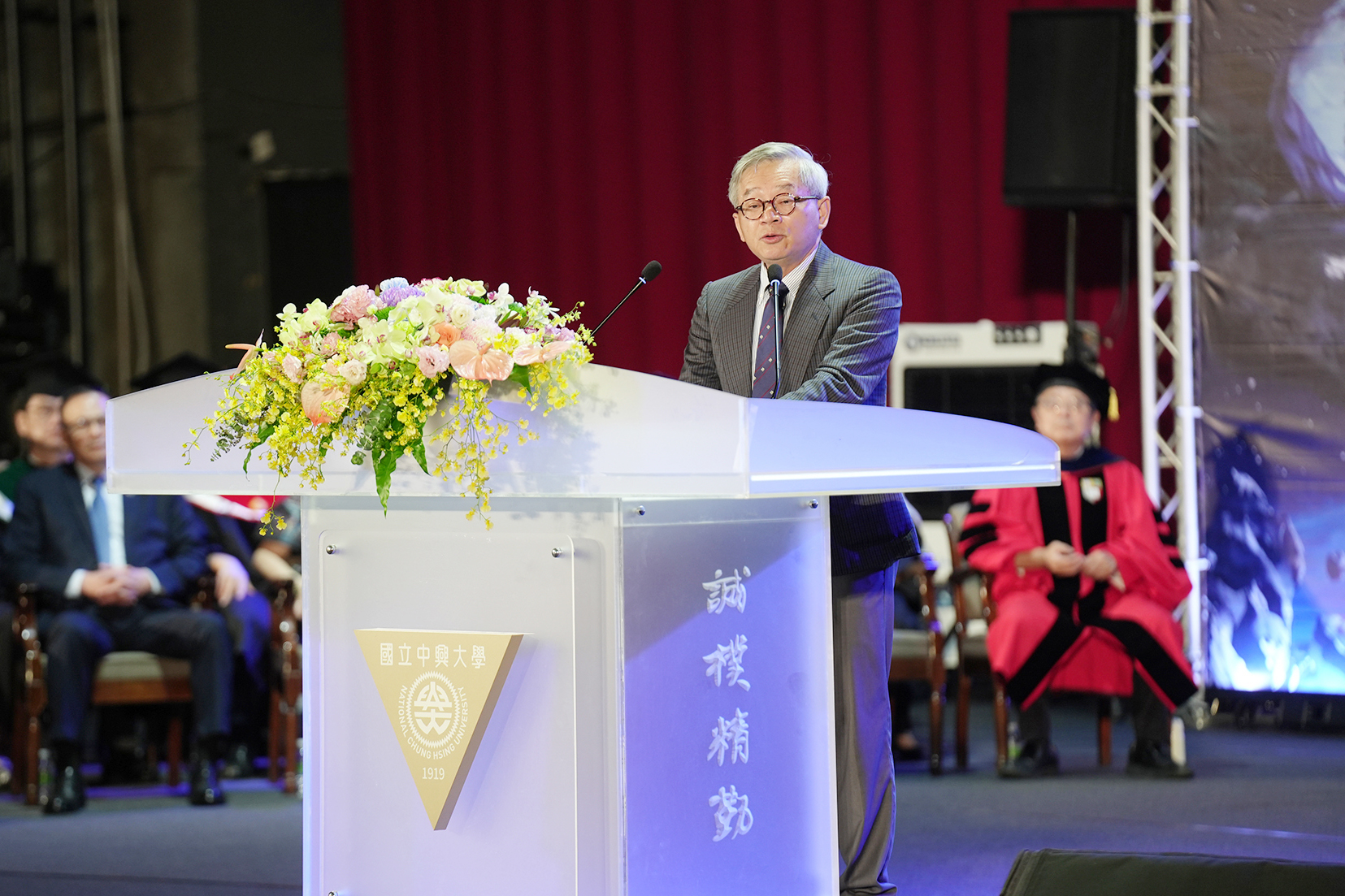
Minister Wu Cheng-Wen of the National Science and Technology Council (NSTC) attends NCHU's commencement ceremony on May 30 as the keynote guest.
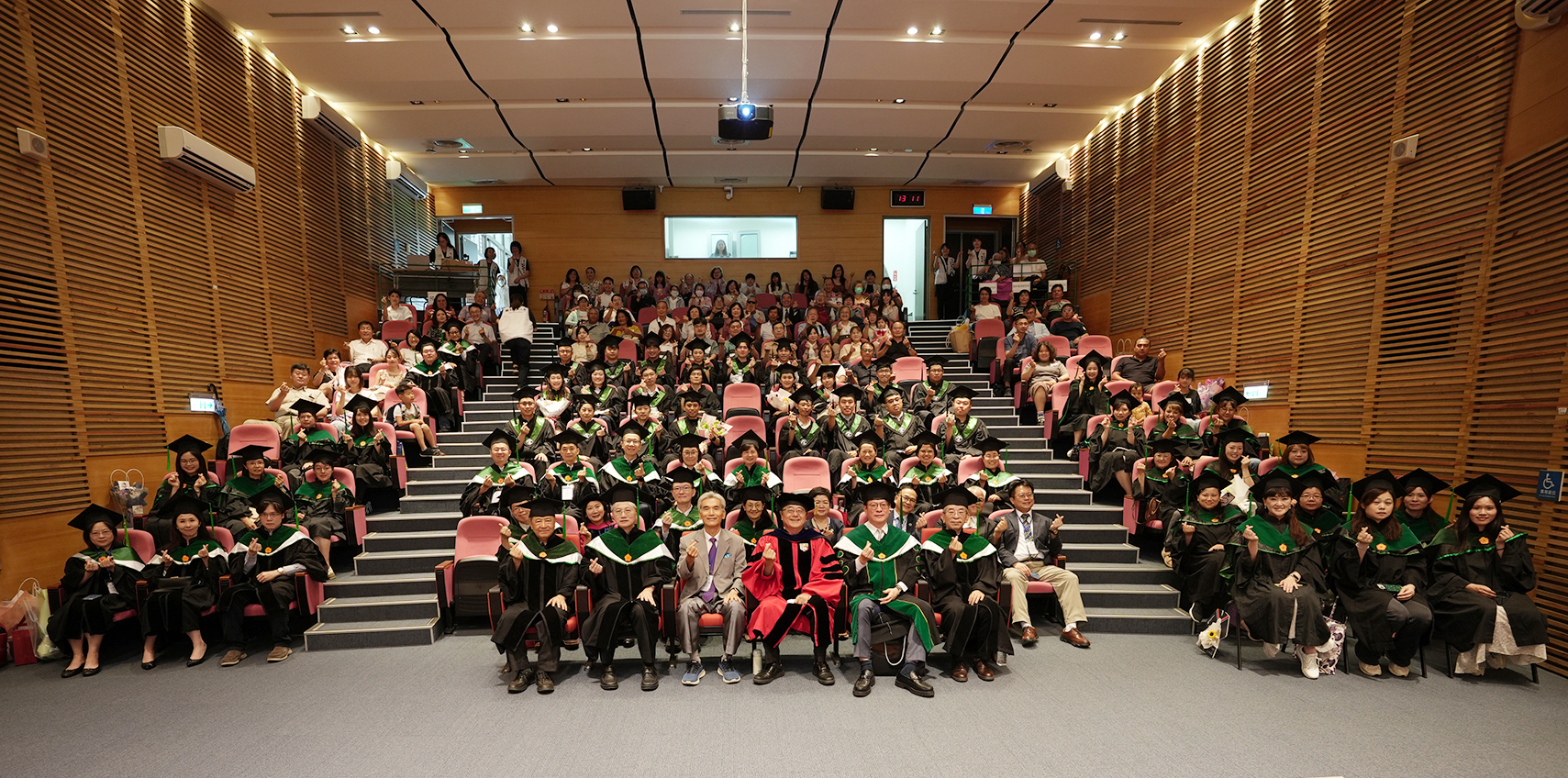
Members of the inaugural graduating class of NCHU’s College of Medicine pose for a group photo.