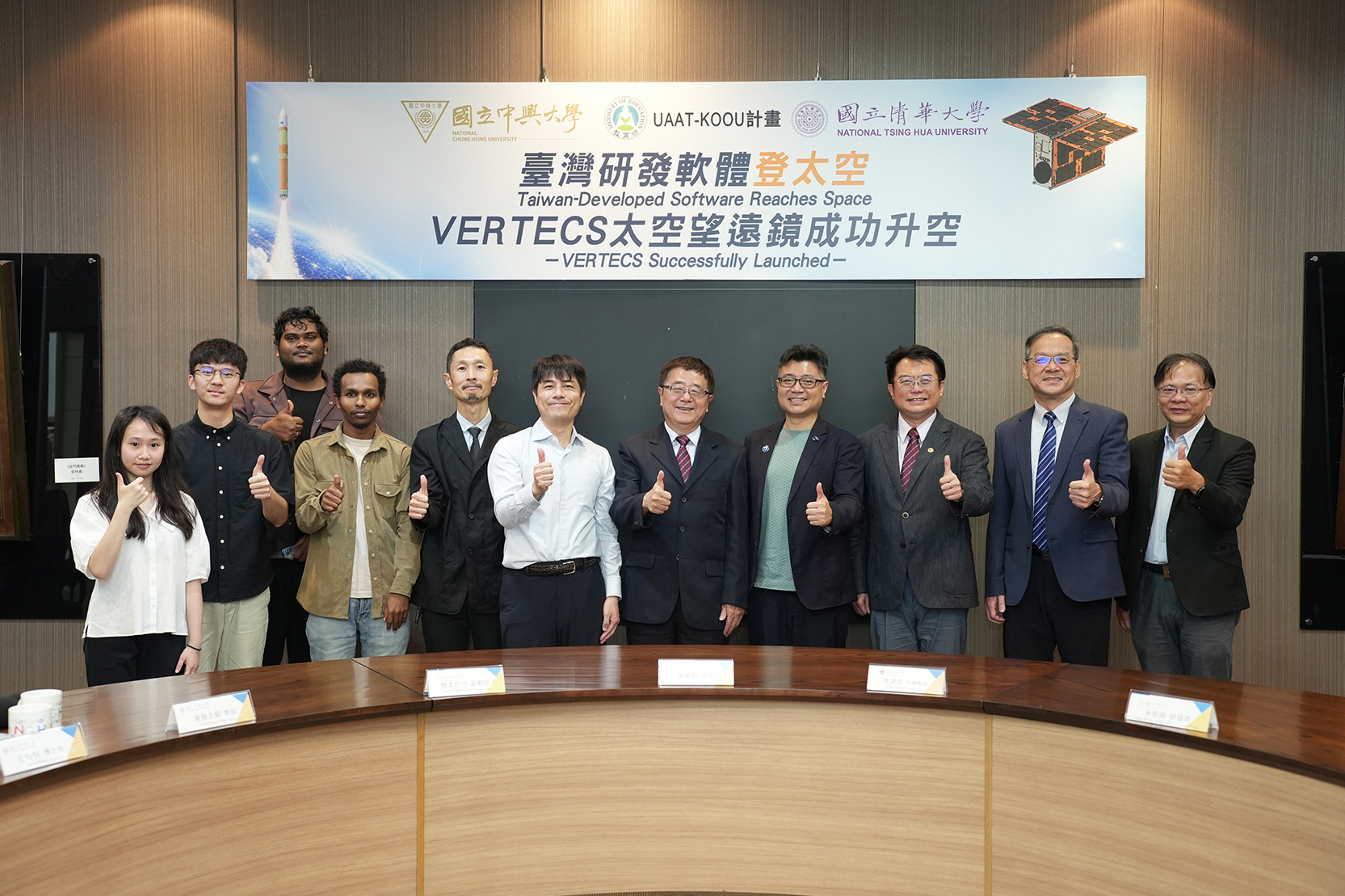


NCHU and NTHU Join Japan’s H3 Rocket Mission as Taiwan-Developed Software Reaches Space
2026-06-26
興新聞張貼者
Unit秘書室
1,835
The CubeSat space telescope VERTECS (Visible Extragalactic background RadiaTion Exploration by CubeSat), jointly developed with the participation of research teams from National Chung Hsing University (NCHU) and National Tsing Hua University (NTHU), was successfully launched aboard Japan’s latest H3 Launch Vehicle No. 6 on June 12 .
The mission is led by the Kyushu Institute of Technology (Kyutech) and carried out in collaboration with the Japan Aerospace Exploration Agency (JAXA) and 13 academic, research, and industrial partners from Taiwan and Japan. The successful launch marks a significant milestone for Taiwan’s participation in international space science missions.
The launch not only represents a new chapter in Taiwan–Japan cooperation in space technology, but also highlights the achievements of the Ministry of Education’s UAAT-KOOU program, “Space Technology Exploration and Data Science Applications.” Among those involved (remotely and on-site) in the launch event in Japan were NCHU Vice President for Research and Development Prof. Song Jen-Ming, Deputy Director General Hsin-Yuan Tseng of the Department of Information and Technology Education, Ministry of Education, NCHU Associate Professor Tetsuya Hashimoto, and NTHU Professor Tomo Goto, who witnessed this historic moment firsthand.
Exploring One of the Greatest Mysteries of the Universe
Astronomers have long known that the cosmic background light contains an “excess light” component that is several times brighter than the combined light from all known galaxies. However, the origin of this mysterious emission remains unexplained and is regarded as one of the major unsolved problems in modern astronomy.
Because Earth's atmosphere is far brighter than the faint cosmic background light, space-based observations are essential for achieving the required measurement precision. With its exceptionally wide 36-square-degree field of view, VERTECS is expected to conduct the world's most precise visible-light observations of the cosmic background radiation over the next year. The mission may provide critical clues to understanding the origin of the excess light and the evolution of the universe.
Taiwan-Developed Systems Successfully Reach Space
A particularly noteworthy achievement is that both the data acquisition system and the data processing and calibration pipeline used by VERTECS are powered by software contributed by Taiwanese researchers. These systems have now successfully entered orbit with the satellite, demonstrating Taiwan’s growing capabilities in space data science and satellite payload technologies.
VERTECS is also the first space mission under the Ministry of Education’s integrated UAAT-KOOU project, “Space Technology Exploration and Data Science Applications”, led by Prof. Charles Chien-Hung Lin of National Cheng Kung University (NCKU). Prof. Lin said "the program brings together NCHU, NTHU, Kyutech, Kyushu University, and other partners to develop and launch three CubeSat science missions while cultivating the next generation of Taiwan’s space technology talent."
Cultivating Space Talent Through International Collaboration
Prof. Tetsuya Hashimoto, Associate Professor in the Department of Physics at NCHU and Principal Investigator of the Taiwanese contribution, said: “It is truly inspiring to see young Taiwanese students contributing to such an important international space science mission. This achievement represents not only scientific progress but also a major success in cultivating Taiwan’s future space talent.”
Prof. Tomo Goto of NTHU, Co-Principal Investigator of the mission, added: “VERTECS will conduct the world’s most precise observations of the cosmic background light in visible wavelengths. This is an important first step toward understanding the origin of the mysterious extragalactic background light and will help us gain deeper insights into the formation and evolution of the universe.”
Deputy Director General Hsin-Yuan Tseng stated: “The VERTECS mission demonstrates the success of Taiwan’s higher education system and international scientific collaboration. The Ministry of Education will continue supporting space technology development and key talent cultivation, helping Taiwan’s young researchers engage with the global space community and enhancing Taiwan’s visibility and competitiveness in the international space sector.”
Following its successful launch, the VERTECS team will begin satellite commissioning and initial observations. Over the coming year, the telescope is expected to continuously collect cosmic background radiation data, bringing scientists closer to solving the mystery of the universe’s excess light.
Press conference livestream (Source: FTV News)
The mission is led by the Kyushu Institute of Technology (Kyutech) and carried out in collaboration with the Japan Aerospace Exploration Agency (JAXA) and 13 academic, research, and industrial partners from Taiwan and Japan. The successful launch marks a significant milestone for Taiwan’s participation in international space science missions.
The launch not only represents a new chapter in Taiwan–Japan cooperation in space technology, but also highlights the achievements of the Ministry of Education’s UAAT-KOOU program, “Space Technology Exploration and Data Science Applications.” Among those involved (remotely and on-site) in the launch event in Japan were NCHU Vice President for Research and Development Prof. Song Jen-Ming, Deputy Director General Hsin-Yuan Tseng of the Department of Information and Technology Education, Ministry of Education, NCHU Associate Professor Tetsuya Hashimoto, and NTHU Professor Tomo Goto, who witnessed this historic moment firsthand.
Exploring One of the Greatest Mysteries of the Universe
Astronomers have long known that the cosmic background light contains an “excess light” component that is several times brighter than the combined light from all known galaxies. However, the origin of this mysterious emission remains unexplained and is regarded as one of the major unsolved problems in modern astronomy.
Because Earth's atmosphere is far brighter than the faint cosmic background light, space-based observations are essential for achieving the required measurement precision. With its exceptionally wide 36-square-degree field of view, VERTECS is expected to conduct the world's most precise visible-light observations of the cosmic background radiation over the next year. The mission may provide critical clues to understanding the origin of the excess light and the evolution of the universe.
Taiwan-Developed Systems Successfully Reach Space
A particularly noteworthy achievement is that both the data acquisition system and the data processing and calibration pipeline used by VERTECS are powered by software contributed by Taiwanese researchers. These systems have now successfully entered orbit with the satellite, demonstrating Taiwan’s growing capabilities in space data science and satellite payload technologies.
VERTECS is also the first space mission under the Ministry of Education’s integrated UAAT-KOOU project, “Space Technology Exploration and Data Science Applications”, led by Prof. Charles Chien-Hung Lin of National Cheng Kung University (NCKU). Prof. Lin said "the program brings together NCHU, NTHU, Kyutech, Kyushu University, and other partners to develop and launch three CubeSat science missions while cultivating the next generation of Taiwan’s space technology talent."
Cultivating Space Talent Through International Collaboration
Prof. Tetsuya Hashimoto, Associate Professor in the Department of Physics at NCHU and Principal Investigator of the Taiwanese contribution, said: “It is truly inspiring to see young Taiwanese students contributing to such an important international space science mission. This achievement represents not only scientific progress but also a major success in cultivating Taiwan’s future space talent.”
Prof. Tomo Goto of NTHU, Co-Principal Investigator of the mission, added: “VERTECS will conduct the world’s most precise observations of the cosmic background light in visible wavelengths. This is an important first step toward understanding the origin of the mysterious extragalactic background light and will help us gain deeper insights into the formation and evolution of the universe.”
Deputy Director General Hsin-Yuan Tseng stated: “The VERTECS mission demonstrates the success of Taiwan’s higher education system and international scientific collaboration. The Ministry of Education will continue supporting space technology development and key talent cultivation, helping Taiwan’s young researchers engage with the global space community and enhancing Taiwan’s visibility and competitiveness in the international space sector.”
Following its successful launch, the VERTECS team will begin satellite commissioning and initial observations. Over the coming year, the telescope is expected to continuously collect cosmic background radiation data, bringing scientists closer to solving the mystery of the universe’s excess light.
Press conference livestream (Source: FTV News)
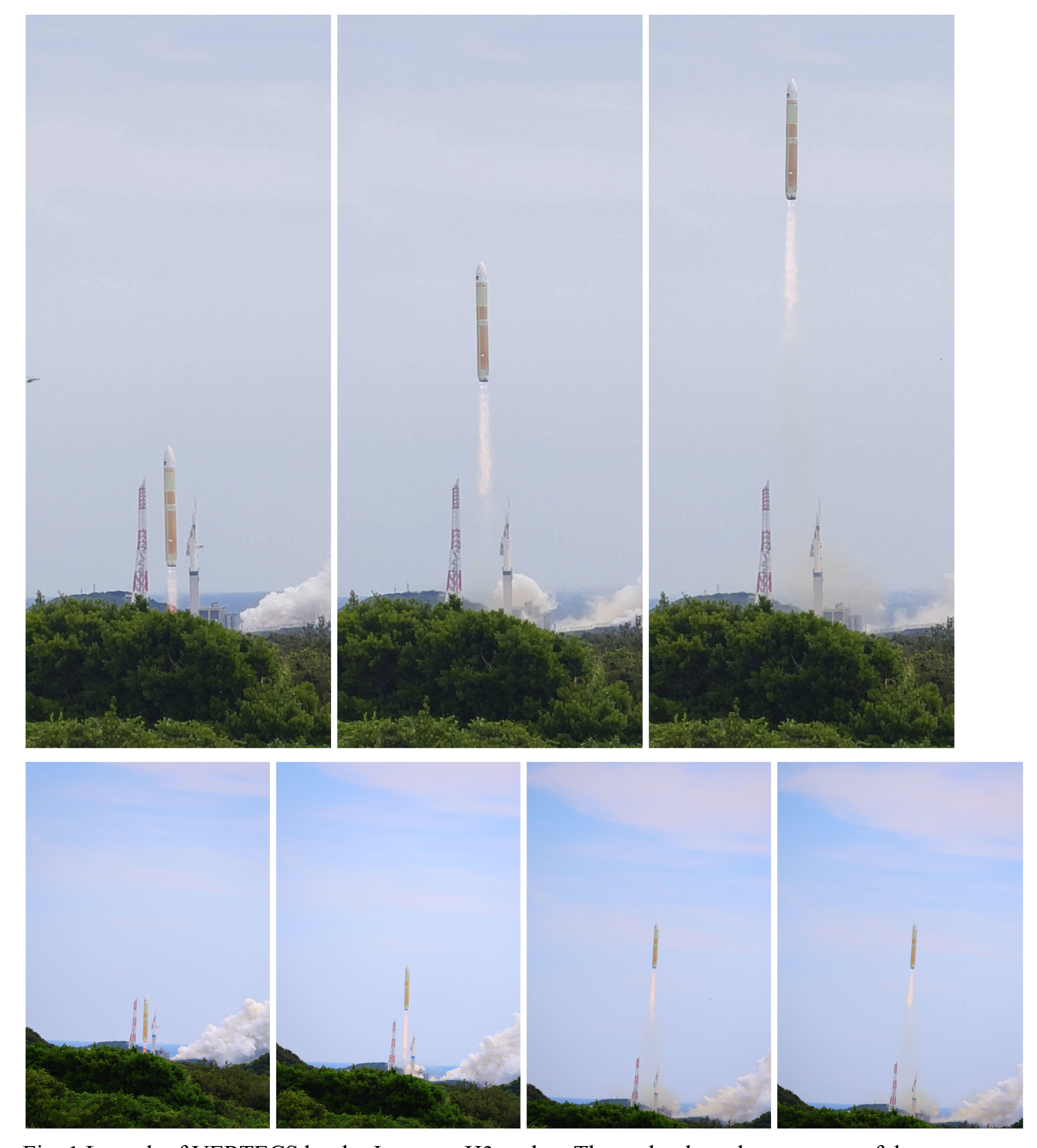
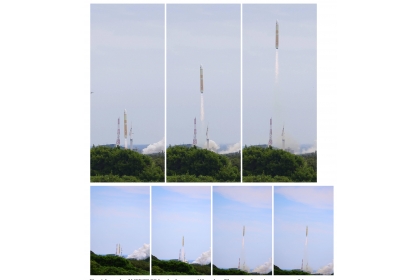
Launch of VERTECS by the Japanese H3 rocket. The rocket launch was successful. Launch video:
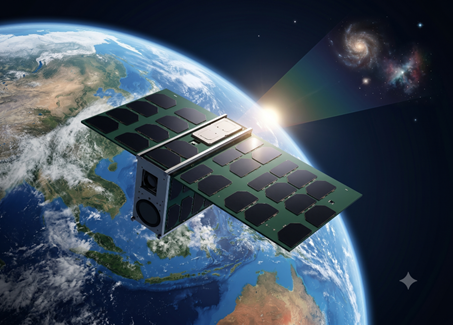
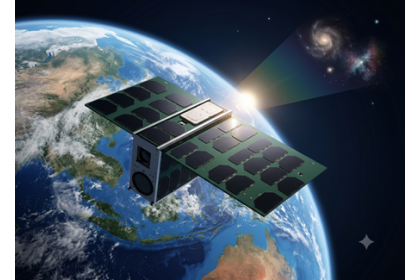
Conceptual image of the VERTECS telescope conducting observations in space.