

NCHU Partners with UC Davis to Foster Global Talent Through Interdisciplinary Learning
2026-08-03
興新聞張貼者
Unit秘書室
902
Source: OIA Academic Exchange Division
NCHU, in collaboration with its flagship partner institution, the University of California, Davis (UC Davis), held the UC Davis International Interdisciplinary Sustainability Innovation Camp in July 2026. Supported by additional funding from the Ministry of Education's “The Program on Bilingual Education for Students in College”, the camp combined academic coursework, field visits, and international exchange to encourage students to explore global issues from interdisciplinary perspectives while broadening their international outlook and strengthening their cross-cultural communication skills.
The camp brought together eight students from four different colleges, demonstrating NCHU's commitment to interdisciplinary learning. Participants included five students from the College of Law and Politics, one from the College of Management, one from the College of Electrical Engineering and Computer Science, and one from the College of Agriculture and Natural Resources. During the one-week program at the UC Davis School of Law, students attended courses covering topics such as Civil Procedure, Trust Law, Wills and Estates, and Business Organizations. Through activities including moot court, court observations, and a prison visit, students further developed their analytical thinking, critical reasoning, and communication skills.
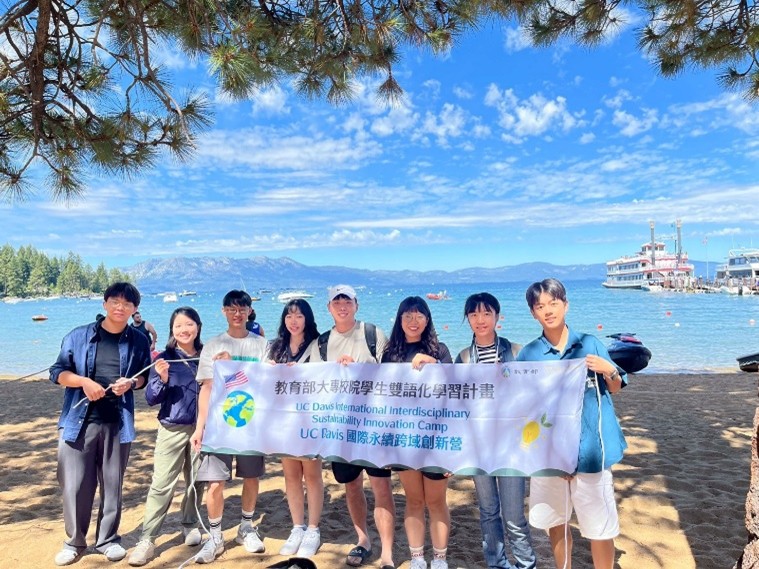
Beyond the classroom, students visited Lake Tahoe to gain a deeper understanding of ecological conservation and environmental sustainability. They also toured the UC Davis Coffee Center, the first academic coffee research center in North America, where they learned about the coffee industry's supply chain, production, and marketing while exploring how sustainability principles are integrated into industry development. Before returning to Taiwan, students participated in an urban exploration of San Francisco, observing the city's practices in sustainable transportation, public space planning, and urban governance. Through these experiences, they examined how different disciplines address contemporary societal challenges in areas such as the rule of law, environmental conservation, urban development, and sustainable industries.
On the final day of the camp, the students, accompanied by Dr. Edith Su, Director of the Academic Exchange Division at Office of International Affairs, OIA, visited the Education Division of the Taipei Economic and Cultural Office in San Francisco. They were warmly received by Director Ching-Feng Tung. During the visit, students shared their learning experiences and reflections from the camp and exchanged insights gained through their overseas study experience. Director Tung commended the students for their enthusiasm, initiative, and outstanding performance, encouraging them to continue broadening their global perspectives, embrace interdisciplinary and cross-cultural learning, and transform this valuable experience into a foundation for their future academic and professional development.
Participating students remarked that the camp not only deepened their understanding of U.S. law and sustainable development but also provided valuable opportunities to engage with UC Davis faculty, students, and members of the local community. These interactions enabled them to experience multicultural exchange firsthand, develop the ability to approach issues from diverse perspectives, and further strengthen their cross-cultural communication skills.
NCHU stated that it will continue to cultivate a diverse international learning environment by promoting interdisciplinary collaboration and expanding overseas learning opportunities. The University also remains committed to encouraging students to use English in professional and academic settings, integrating language proficiency with disciplinary expertise, and advancing its educational philosophy of “Interdisciplinary Learning and Talent Development.” Through these efforts, NCHU aims to nurture graduates equipped with global competitiveness, cross-cultural communication skills, and interdisciplinary competence.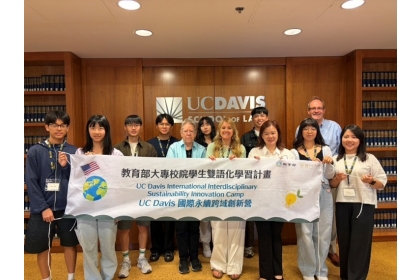
NCHU, in collaboration with its flagship partner institution, the University of California, Davis (UC Davis), held the UC Davis International Interdisciplinary Sustainability Innovation Camp in July 2026. Supported by additional funding from the Ministry of Education's “The Program on Bilingual Education for Students in College”, the camp combined academic coursework, field visits, and international exchange to encourage students to explore global issues from interdisciplinary perspectives while broadening their international outlook and strengthening their cross-cultural communication skills.
The camp brought together eight students from four different colleges, demonstrating NCHU's commitment to interdisciplinary learning. Participants included five students from the College of Law and Politics, one from the College of Management, one from the College of Electrical Engineering and Computer Science, and one from the College of Agriculture and Natural Resources. During the one-week program at the UC Davis School of Law, students attended courses covering topics such as Civil Procedure, Trust Law, Wills and Estates, and Business Organizations. Through activities including moot court, court observations, and a prison visit, students further developed their analytical thinking, critical reasoning, and communication skills.
Beyond the classroom, students visited Lake Tahoe to gain a deeper understanding of ecological conservation and environmental sustainability. They also toured the UC Davis Coffee Center, the first academic coffee research center in North America, where they learned about the coffee industry's supply chain, production, and marketing while exploring how sustainability principles are integrated into industry development. Before returning to Taiwan, students participated in an urban exploration of San Francisco, observing the city's practices in sustainable transportation, public space planning, and urban governance. Through these experiences, they examined how different disciplines address contemporary societal challenges in areas such as the rule of law, environmental conservation, urban development, and sustainable industries.
On the final day of the camp, the students, accompanied by Dr. Edith Su, Director of the Academic Exchange Division at Office of International Affairs, OIA, visited the Education Division of the Taipei Economic and Cultural Office in San Francisco. They were warmly received by Director Ching-Feng Tung. During the visit, students shared their learning experiences and reflections from the camp and exchanged insights gained through their overseas study experience. Director Tung commended the students for their enthusiasm, initiative, and outstanding performance, encouraging them to continue broadening their global perspectives, embrace interdisciplinary and cross-cultural learning, and transform this valuable experience into a foundation for their future academic and professional development.
Participating students remarked that the camp not only deepened their understanding of U.S. law and sustainable development but also provided valuable opportunities to engage with UC Davis faculty, students, and members of the local community. These interactions enabled them to experience multicultural exchange firsthand, develop the ability to approach issues from diverse perspectives, and further strengthen their cross-cultural communication skills.
NCHU stated that it will continue to cultivate a diverse international learning environment by promoting interdisciplinary collaboration and expanding overseas learning opportunities. The University also remains committed to encouraging students to use English in professional and academic settings, integrating language proficiency with disciplinary expertise, and advancing its educational philosophy of “Interdisciplinary Learning and Talent Development.” Through these efforts, NCHU aims to nurture graduates equipped with global competitiveness, cross-cultural communication skills, and interdisciplinary competence.
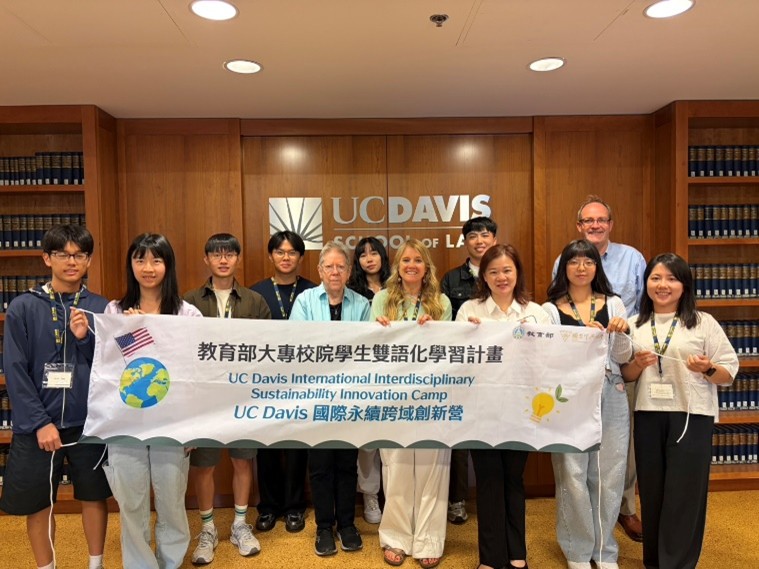
Group photo of students and UC Davis School of Law faculty
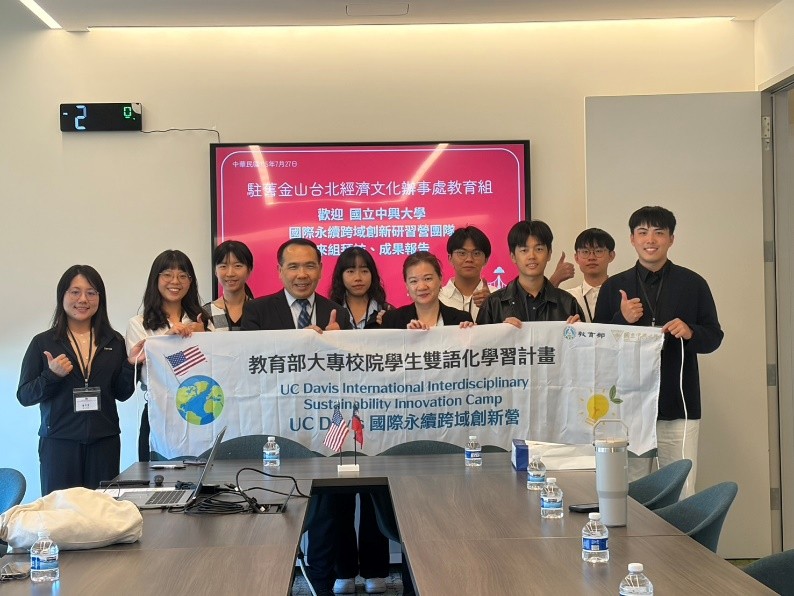
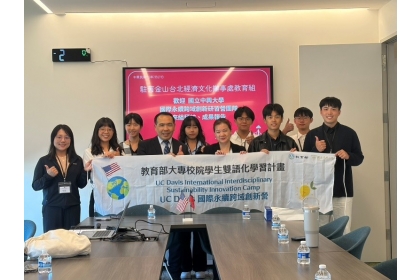
NCHU students and Dr. Edith Su, Director of the Academic Exchange Division, Office of International Affairs (right 5), pose for a group photo with Director Ching-Feng Tung(left 4).