

The Astronomical Satellite “VERTECS” Completes Initial Operations and Begins Full-Scale Observations ~The first public release of space images captured by VERTECS~
2026-09-08
興新聞張貼者
Unit秘書室
1,057
Source: Department of Physics, NCHU
The first-light space images have been captured by “Visible Extragalactic background RadiaTion Exploration by CubeSat (VERTECS)”, with Taiwan's contributions to pipelines for data downlink, image-distortion correction, and bad-pixel masking. A research team from National Chung Hsing University (NCHU) and National Tsing Hua University (NTHU) participates in the international CubeSat project, VERTECS, in collaboration with Kyushu Institute of Technology, Kwansei Gakuin University, Tokyo City University, Kanazawa University, the University of Tokyo, and some collaborators in Japan. The onboard instruments of VERTECS have transitioned from initial operations to routine observations.
VERTECS was launched at 9:53:59 a.m. (Japan Standard Time) on June 12, 2026, from Tanegashima Space Center aboard H3 Launch Vehicle No. 6 (30-type test configuration). After being placed into its designated orbit, the satellite successfully established communications with its operations ground station. Since then, the team has sequentially verified the functions of the satellite’s power, communications, attitude control, data processing, and observation instruments.
During initial operations, VERTECS was pointed toward selected regions of the sky, captured astronomical objects with its onboard visible-light observation instrument, and transmitted the acquired observation data to the ground. These operations confirmed that the satellite system and observation instrument function normally in orbit and that routine astronomical observations can be conducted.
During routine observations, VERTECS will begin full-scale observations of the extragalactic background light, its primary scientific objective, with the aim of elucidating the history of star and galaxy formation in the Universe.
We once again express our deepest gratitude to all organizations and individuals who have cooperated with and supported the development, launch, and initial operations of the satellite. We introduce some of the observation images acquired during the initial operations and the early stage of routine observations.
Figure 1 shows images acquired by VERTECS while observing the directions of the respective sky regions. The images primarily show stars and nebulae. The results confirm that VERTECS was pointed toward the intended regions of the sky and maintained a stable attitude during observations (Figs 1 and 2).
VERTECS is also the first space mission under the Ministry of Education’s integrated UAAT-KOOU project, “Space Technology Exploration and Data Science Applications”, led by Prof. Charles Chien-Hung Lin of National Cheng Kung University (NCKU). Prof. Lin said "I sincerely hope that the contributions to VERTECS will foster the growth and development of space science in universities in Taiwan. I am especially happy that our integrated project has NCHU on board as a new-space-mission university led by Prof. Hashimoto."
Prof. Tetsuya Hashimoto, Associate Professor in the Department of Physics at NCHU and Principal Investigator of the Taiwanese contribution, said: "It’s truly awe-inspiring how breathtakingly beautiful the universe is."
Prof. Tomo Goto of NTHU, Co-Principal Investigator of the mission, added: “It is truly moving to see images actually taken in space beautifully processed using software developed by Taiwanese students."
The VERTECS observation instrument can observe light from the sky by separating it into multiple wavelength bands. Using this capability, the brightness of astronomical objects and the sky in each wavelength band can be measured. In the future, images acquired in different wavelength bands will be combined to create four-color observation data to address the mysterious origin of extragalactic background light.
This work is supported by the following funding:
教育部UAAT-KOOU計畫「太空科技探索與資料科學應用」
NCHU/教育部 114/115年學海築夢.
Figure 1: Images of the Cygnus Loop (top), Lagoon Nebula (bottom left), and North America Nebula (bottom right) acquired with the visible-light telescope onboard VERTECS. One side of the image corresponds to about 3 arc degrees, which is six times the diameter of the Moon. The brightness and contrast of the images have been adjusted to make the astronomical objects easier to see. Taiwan's pipelines for data downlink, image-distortion correction, and bad-pixel masking are used. (Credit: VERTECS Project)
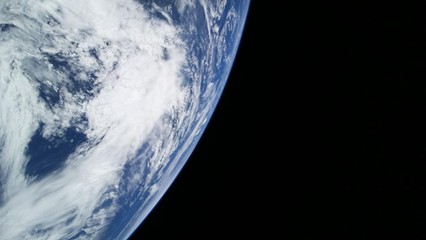
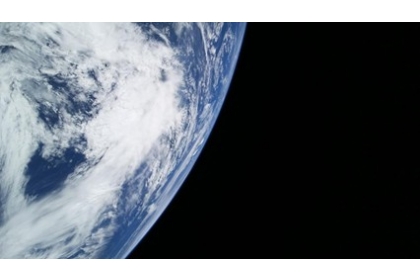
Figure 2: Image of Earth acquired by VERTECS. This image was taken with the mini-camera rather than the main telescope. (Credit: VERTECS Project). A video link: https://drive.google.com/file/d/1cVF0sJBgYnISBewnYT_cspVyT3HzcSsk/view?usp=sharing
Relevant links:
-Successful launch of VERTECS
https://www2.nchu.edu.tw/en-news-detail/id/1288/title/NCHU_and_NTHU_Join_Japan%E2%80%99s_H3_Rocket_Mission_as_Taiwan-Developed_Software_Reaches_Space
-Japanese Press Release on 4 Sep. 2026: 超小型天文衛星「VERTECS」初期運用を完了し、本格観測を開始~宇宙から撮影された画像を初公開~
(NCHU is mentioned in the project summary)
https://www.kyutech.ac.jp/archives/025/202609/press260903vertecs.pdf
-Launch Result of H3 Launch Vehicle flight No.6, 30 configuration Test Vehicle
https://global.jaxa.jp/press/2026/06/20260612-1_e.html
-Launch live streaming of H3 Launch Vehicle flight No.6, 30 configuration Test Vehicle
https://www.youtube.com/live/HSiaGTea1rc
-VERTECS project website
https://vertecs-project.com/
-H3ロケット6号機(30形態試験機)の打上げについて(JAXAサイト)
https://www.jaxa.jp/press/2026/04/20260424-1_j.html
-九州工業大学で超小型衛星「VERTECS」お披露目会を開催(2026.5.14開催)
https://www.kyutech.ac.jp/whats-new/press/entry-12116.html
-CG of the launch c. JAXA.
https://www.youtube.com/watch?v=ajHuX22Oxjg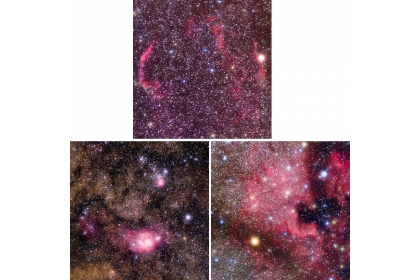
The first-light space images have been captured by “Visible Extragalactic background RadiaTion Exploration by CubeSat (VERTECS)”, with Taiwan's contributions to pipelines for data downlink, image-distortion correction, and bad-pixel masking. A research team from National Chung Hsing University (NCHU) and National Tsing Hua University (NTHU) participates in the international CubeSat project, VERTECS, in collaboration with Kyushu Institute of Technology, Kwansei Gakuin University, Tokyo City University, Kanazawa University, the University of Tokyo, and some collaborators in Japan. The onboard instruments of VERTECS have transitioned from initial operations to routine observations.
VERTECS was launched at 9:53:59 a.m. (Japan Standard Time) on June 12, 2026, from Tanegashima Space Center aboard H3 Launch Vehicle No. 6 (30-type test configuration). After being placed into its designated orbit, the satellite successfully established communications with its operations ground station. Since then, the team has sequentially verified the functions of the satellite’s power, communications, attitude control, data processing, and observation instruments.
During initial operations, VERTECS was pointed toward selected regions of the sky, captured astronomical objects with its onboard visible-light observation instrument, and transmitted the acquired observation data to the ground. These operations confirmed that the satellite system and observation instrument function normally in orbit and that routine astronomical observations can be conducted.
During routine observations, VERTECS will begin full-scale observations of the extragalactic background light, its primary scientific objective, with the aim of elucidating the history of star and galaxy formation in the Universe.
We once again express our deepest gratitude to all organizations and individuals who have cooperated with and supported the development, launch, and initial operations of the satellite. We introduce some of the observation images acquired during the initial operations and the early stage of routine observations.
Figure 1 shows images acquired by VERTECS while observing the directions of the respective sky regions. The images primarily show stars and nebulae. The results confirm that VERTECS was pointed toward the intended regions of the sky and maintained a stable attitude during observations (Figs 1 and 2).
VERTECS is also the first space mission under the Ministry of Education’s integrated UAAT-KOOU project, “Space Technology Exploration and Data Science Applications”, led by Prof. Charles Chien-Hung Lin of National Cheng Kung University (NCKU). Prof. Lin said "I sincerely hope that the contributions to VERTECS will foster the growth and development of space science in universities in Taiwan. I am especially happy that our integrated project has NCHU on board as a new-space-mission university led by Prof. Hashimoto."
Prof. Tetsuya Hashimoto, Associate Professor in the Department of Physics at NCHU and Principal Investigator of the Taiwanese contribution, said: "It’s truly awe-inspiring how breathtakingly beautiful the universe is."
Prof. Tomo Goto of NTHU, Co-Principal Investigator of the mission, added: “It is truly moving to see images actually taken in space beautifully processed using software developed by Taiwanese students."
The VERTECS observation instrument can observe light from the sky by separating it into multiple wavelength bands. Using this capability, the brightness of astronomical objects and the sky in each wavelength band can be measured. In the future, images acquired in different wavelength bands will be combined to create four-color observation data to address the mysterious origin of extragalactic background light.
This work is supported by the following funding:
教育部UAAT-KOOU計畫「太空科技探索與資料科學應用」
NCHU/教育部 114/115年學海築夢.
Figure 1: Images of the Cygnus Loop (top), Lagoon Nebula (bottom left), and North America Nebula (bottom right) acquired with the visible-light telescope onboard VERTECS. One side of the image corresponds to about 3 arc degrees, which is six times the diameter of the Moon. The brightness and contrast of the images have been adjusted to make the astronomical objects easier to see. Taiwan's pipelines for data downlink, image-distortion correction, and bad-pixel masking are used. (Credit: VERTECS Project)
Figure 2: Image of Earth acquired by VERTECS. This image was taken with the mini-camera rather than the main telescope. (Credit: VERTECS Project). A video link: https://drive.google.com/file/d/1cVF0sJBgYnISBewnYT_cspVyT3HzcSsk/view?usp=sharing
Relevant links:
-Successful launch of VERTECS
https://www2.nchu.edu.tw/en-news-detail/id/1288/title/NCHU_and_NTHU_Join_Japan%E2%80%99s_H3_Rocket_Mission_as_Taiwan-Developed_Software_Reaches_Space
-Japanese Press Release on 4 Sep. 2026: 超小型天文衛星「VERTECS」初期運用を完了し、本格観測を開始~宇宙から撮影された画像を初公開~
(NCHU is mentioned in the project summary)
https://www.kyutech.ac.jp/archives/025/202609/press260903vertecs.pdf
-Launch Result of H3 Launch Vehicle flight No.6, 30 configuration Test Vehicle
https://global.jaxa.jp/press/2026/06/20260612-1_e.html
-Launch live streaming of H3 Launch Vehicle flight No.6, 30 configuration Test Vehicle
https://www.youtube.com/live/HSiaGTea1rc
-VERTECS project website
https://vertecs-project.com/
-H3ロケット6号機(30形態試験機)の打上げについて(JAXAサイト)
https://www.jaxa.jp/press/2026/04/20260424-1_j.html
-九州工業大学で超小型衛星「VERTECS」お披露目会を開催(2026.5.14開催)
https://www.kyutech.ac.jp/whats-new/press/entry-12116.html
-CG of the launch c. JAXA.
https://www.youtube.com/watch?v=ajHuX22Oxjg
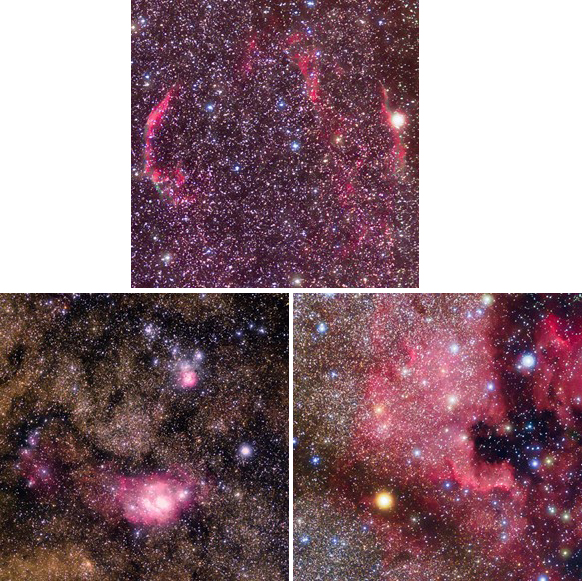
Figure 1:Images of the Cygnus Loop (top), Lagoon Nebula (bottom left), and North America Nebula (bottom right) . (Credit: VERTECS Project)