

【公關中心】突破性研究:發現抗植物病毒新機制 為全球糧食安全提供新屏障
更新時間:2026-09-02 15:01:52 /
張貼時間:2026-08-28 22:30:07
興新聞張貼者
單位秘書室
新聞來源秘書室媒體公關中心
1,211
病毒病害對全球農作物生產、人類健康及畜牧安全帶來嚴峻威脅。其中,植物 DNA 病毒是對糧食作物、蔬菜及多年生經濟作物破壞力最強的病原之一。這類病毒不僅會降低作物的產量與品質,在疫情嚴重時更可能導致作物歉收,對熱帶與亞熱帶地區的小型農業影響尤為深遠 (Tatineni & Hein, 2023)。雙生病毒科 (Geminiviridae) 的病毒主要透過粉蝨傳播。隨著氣候變遷、全球氣溫上升以及農業全球化發展,昆蟲媒介傳播病毒的時間與地理範圍風險均大幅增加 (Kvarnheden, 2026)。此前,由瑞士蘇黎世聯邦理工學院生物系 (ETH Zurich) Wilhelm Gruissem 教授主持的研究已發現,植物 DNA 複製酶——DNA 聚合酶 delta 1 (POLD1) 的單一突變,是木薯對雙生病毒感染產生抗性的關鍵 (Lim et al., 2023)。雖然雙生病毒同樣會利用植物的 POLD1 來複製自身基因組,但 POLD1 突變等位基因究竟如何影響病毒的複製過程,過去一直未有解答。
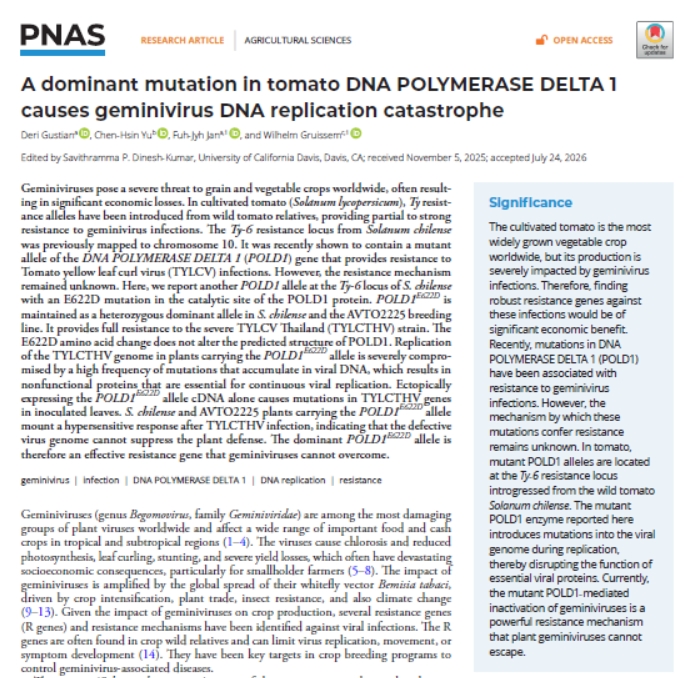
今日,Wilhelm Gruissem 教授及國立中興大學詹富智校長的研究團隊於《美國國家科學院院刊》(Proceedings of the National Academy of Sciences USA, PNAS) 發表最新研究,正式揭開了 POLD1 阻絕雙生病毒感染植物的關鍵機制 (Gustian et al., 2026)。
研究團隊以嚴重威脅全球番茄產量的「番茄黃化捲葉病毒」進行實驗。結果顯示,在感染番茄栽培種與野生種 (Solanum chilense) 後,番茄突變的POLD1會在病毒基因組複製過程中,主動將突變導入病毒 DNA 中。這些突變會破壞病毒關鍵蛋白質的功能,進而阻止病毒在植物體內擴散蔓延。
此外,突變的 POLD1在番茄野生種族群中以雜合等位基因 (heterozygous allele) 的形式穩定維持,使植物得以有效抑制病毒並正常生長。這項研究發現的 POLD1 突變等位基因,為育種專家提供了一種雙生病毒無法輕易逃脫的強效抗性機制,對未來作物育種與糧食安全維護具有重大價值。
參考文獻:
Gustian, D., Yu, C.H., Jan, F.J. Jan and Gruissem W. (2026) A dominant mutation in tomato DNA POLYMERASE DELTA 1 causes geminivirus DNA replication catastrophe. Proceedings of the National Academy of Sciences U.S.A. 123 (35) e2531841123, https://doi.org/10.1073/pnas.2531841123
Kvarnheden, A. (2026) Challenges with insect-transmitted viruses infecting crops in a changing climate. Tropical Plant Pathology 51:37, https://doi.org/10.1007/s40858-026-00819-3
Lim, Y.W., Mansfeld, B.N., Schläpfer, P., Gilbert, K.B., Narayanan, N.N., Qi, W., Wang, Q., Zhong, Z., Boyher, A., Gehan, J., Beyene, G., Lin, Z.D., Esuma, W., Feng, S., Chanez, C., Eggenberger, N., Adiga, G., Jacobsen, S.E., Taylor, N., Bart, R.S. and Gruissem, W. (2022) Mutations in DNA polymerase subunit 1 segregate with CMD2-type resistance to Cassava Mosaic Geminiviruses. Nature Communications 13: 3933, https://doi.org/10.1038/s41467-022-31414-0
Tatineni, S. and Hein, G.L. (2023) Plant viruses of agricultural importance: current and future perspectives of virus disease management strategies. Phytopathology 113: 117-141, https://doi.org/10.1094/PHYTO-05-22-0167-RVW
新聞報導彙整
1.經濟日報:突破性研究 發現抗植物病毒新機制 為全球糧食安全提供新屏障
2.工商時報:突破性研究!發現抗植物病毒新機制 為全球糧食安全提供新屏障
3.大成報:興大突破性研究:發現抗植物病毒新機制 為全球糧食安全提供新屏障
4.中央社:突破性研究:發現抗植物病毒新機制 為全球糧食安全提供新屏障
5.蕃薯藤1:興大突破性研究:發現抗植物病毒新機制 為全球糧食安全提供新屏障
6.蕃薯藤2:突破性研究:發現抗植物病毒新機制 為全球糧食安全提供新屏障
7.世界民報:發現抗植物病毒新機制 全球糧食安全有新屏障
8.LIFE生活網:興大突破性研究:發現抗植物病毒新機制 為全球糧食安全提供新屏障
9.天天上新聞:興大突破性研究:發現抗植物病毒新機制 為全球糧食安全提供新屏障
今日,Wilhelm Gruissem 教授及國立中興大學詹富智校長的研究團隊於《美國國家科學院院刊》(Proceedings of the National Academy of Sciences USA, PNAS) 發表最新研究,正式揭開了 POLD1 阻絕雙生病毒感染植物的關鍵機制 (Gustian et al., 2026)。
研究團隊以嚴重威脅全球番茄產量的「番茄黃化捲葉病毒」進行實驗。結果顯示,在感染番茄栽培種與野生種 (Solanum chilense) 後,番茄突變的POLD1會在病毒基因組複製過程中,主動將突變導入病毒 DNA 中。這些突變會破壞病毒關鍵蛋白質的功能,進而阻止病毒在植物體內擴散蔓延。
此外,突變的 POLD1在番茄野生種族群中以雜合等位基因 (heterozygous allele) 的形式穩定維持,使植物得以有效抑制病毒並正常生長。這項研究發現的 POLD1 突變等位基因,為育種專家提供了一種雙生病毒無法輕易逃脫的強效抗性機制,對未來作物育種與糧食安全維護具有重大價值。
參考文獻:
Gustian, D., Yu, C.H., Jan, F.J. Jan and Gruissem W. (2026) A dominant mutation in tomato DNA POLYMERASE DELTA 1 causes geminivirus DNA replication catastrophe. Proceedings of the National Academy of Sciences U.S.A. 123 (35) e2531841123, https://doi.org/10.1073/pnas.2531841123
Kvarnheden, A. (2026) Challenges with insect-transmitted viruses infecting crops in a changing climate. Tropical Plant Pathology 51:37, https://doi.org/10.1007/s40858-026-00819-3
Lim, Y.W., Mansfeld, B.N., Schläpfer, P., Gilbert, K.B., Narayanan, N.N., Qi, W., Wang, Q., Zhong, Z., Boyher, A., Gehan, J., Beyene, G., Lin, Z.D., Esuma, W., Feng, S., Chanez, C., Eggenberger, N., Adiga, G., Jacobsen, S.E., Taylor, N., Bart, R.S. and Gruissem, W. (2022) Mutations in DNA polymerase subunit 1 segregate with CMD2-type resistance to Cassava Mosaic Geminiviruses. Nature Communications 13: 3933, https://doi.org/10.1038/s41467-022-31414-0
Tatineni, S. and Hein, G.L. (2023) Plant viruses of agricultural importance: current and future perspectives of virus disease management strategies. Phytopathology 113: 117-141, https://doi.org/10.1094/PHYTO-05-22-0167-RVW
新聞報導彙整
1.經濟日報:突破性研究 發現抗植物病毒新機制 為全球糧食安全提供新屏障2.工商時報:突破性研究!發現抗植物病毒新機制 為全球糧食安全提供新屏障
3.大成報:興大突破性研究:發現抗植物病毒新機制 為全球糧食安全提供新屏障
4.中央社:突破性研究:發現抗植物病毒新機制 為全球糧食安全提供新屏障
5.蕃薯藤1:興大突破性研究:發現抗植物病毒新機制 為全球糧食安全提供新屏障
6.蕃薯藤2:突破性研究:發現抗植物病毒新機制 為全球糧食安全提供新屏障
7.世界民報:發現抗植物病毒新機制 全球糧食安全有新屏障
8.LIFE生活網:興大突破性研究:發現抗植物病毒新機制 為全球糧食安全提供新屏障
9.天天上新聞:興大突破性研究:發現抗植物病毒新機制 為全球糧食安全提供新屏障